Pool Hurricane Preparation: Code Rules, Screen Enclosure Standards and Storm Exposure by State, 2026
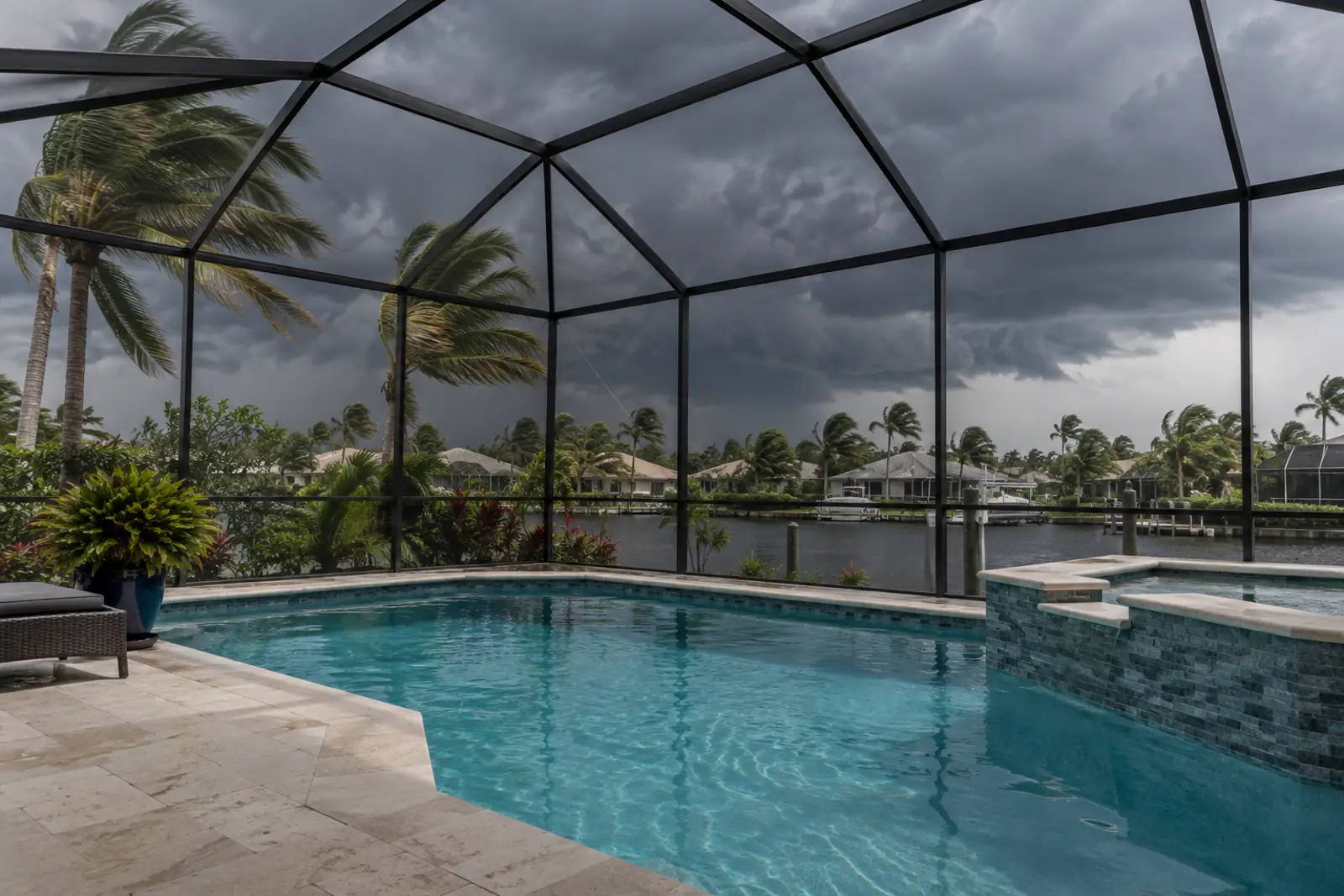
Pool hurricane preparation rests mostly on guidance, not law: Florida agencies and the state pool association say keep the pool full and shock it. Of six coastal state codes checked in October 2026, only Florida's sets screen enclosure wind rules. NOAA HURDAT2 shows 21 hurricanes made landfall in Florida from 1991 to 2025, the most of any state.
The rules at a glance
- Florida had 21 hurricanes make landfall from 1991 to 2025, ahead of Louisiana (15), North Carolina (10) and Texas (9), per a PC&S count of NOAA NHC HURDAT2 landfall records.
- Florida took 12 of the 21 major (Category 3+) hurricane landfalls on the continental US from 1991 to 2025, or 57.1% (PC&S count of NOAA NHC HURDAT2).
- Florida logged 126 hurricane impacts from 1851 to 2025, 40.8% of the 309 continental US hurricanes in the NOAA AOML list (PC&S count).
- Of six coastal state residential codes searched in October 2026, only the Florida Building Code contains screen enclosure wind provisions; the Chapter 3 texts of Louisiana, Alabama, Georgia, South Carolina and North Carolina contain none.
- Florida’s residential code lets screen enclosures be designed for Risk Category I wind speeds (FBC Residential 2023, R301.2.1.1.1), which run 9 to 15 mph below home design speeds in 10 Florida cities outside Miami-Dade and Broward (PC&S calculation from UF GeoPlan wind contours).
- Citizens Property Insurance does not cover screen pool cages under its HO-3 (11/25) or HW-2 (10/25) forms in Florida (Citizens), and TWIA excludes metal screen enclosures in coastal Texas unless they are listed on the Declarations (TWIA).
- Official Florida guidance agrees on keeping water in the pool before a storm, but splits on pump power: Broward County, Tamarac and FSPA say turn it off, while UF/IFAS Extension says keep the pump running while power is on.
- The Florida Building Code 9th edition takes effect on December 31, 2026 (Miami-Dade RER) and adds a 6005-T5 aluminum alloy rule for screen enclosure members with spline grooves (FBC analysis of changes).
Pool hurricane preparation rules by state: the code and insurance matrix
Florida is the only one of six states whose residential code text was searched that writes specific wind rules for pool screen enclosures. Elsewhere, pools and enclosures fall under general residential wind design, and the rules a pool owner meets before a storm are guidance rather than law.
| Jurisdiction | Residential code in force (Oct 2026) | Screen enclosure wind rules in state code | Remove panels / cut designated screens above 75 mph | Fixed county design wind speeds | State residual wind insurer covers screen enclosures | Hurricanes making landfall 1991 to 2025 | Hurricane impacts 1851 to 2025 | Notes |
|---|---|---|---|---|---|---|---|---|
| Florida (outside HVHZ) | 2023 FBC Residential, 8th ed.; 9th ed. effective 2026-12-31 | Yes | Yes | No | No | 21 | 126 | FBC 2002.4 and Table 2002.4 pressures; FBCR R301.2.1.1.1.1 uses Risk Category I wind speeds; 2002.7 screen-cut designs need sealed site-specific engineering; Citizens HO-3 and HW-2 exclude screen pool cages |
| Miami-Dade County (HVHZ) | 2023 FBC, 8th ed., plus HVHZ Sections 1620 to 1626 | Yes | Yes | Yes | No | Florida total | Florida total | 1620.2: 165 mph Risk Category I, 175 mph Risk Category II; 1622 screen enclosure loads, AAF Guide designs signed and sealed |
| Broward County (HVHZ) | 2023 FBC, 8th ed., plus HVHZ Sections 1620 to 1626 | Yes | Yes | Yes | No | Florida total | Florida total | 1620.2: 156 mph Risk Category I, 170 mph Risk Category II; 1622 screen enclosure loads |
| Texas (TDI catastrophe area) | 2024 IRC or IBC for TDI windstorm certification since 2026-04-01 | Not verified | Not verified | No | Partial | 9 | 67 | TWIA covers metal screen enclosures only if listed on the Declarations; listing needs a WPI-8 for enclosures built since 1988-01-01; area = 14 coastal counties plus 5 Harris County cities east of SH 146 |
| Texas (outside catastrophe area, incl. Houston) | Local | Not verified | Not verified | No | Not verified | Texas total | Texas total | City of Houston is not in the TDI windstorm area; Houston Public Works sheet (2012 codes) lists 139 mph Risk Category II |
| Louisiana | 2021 IRC (LSUCC, LAC 17:I.107) | No | No | No | Not verified | 15 | 63 | No 'screen enclosure' text in 2021 IRC Chapter 3 as adopted |
| Mississippi | Local (5 coastal counties enforce 2003 IRC/IBC wind and flood rules) | Not verified | Not verified | No | Not verified | 2 | 20 | No mandatory statewide residential code text searched |
| Alabama | 2015 IRC as modified | No | No | No | Not verified | 3 | 30 | No 'screen enclosure' text in Chapter 3 |
| Georgia | 2024 IRC with Georgia amendments (2026) | No | No | No | Not verified | 0 | 27 | No 'screen enclosure' text in Chapter 3 |
| South Carolina | 2021 IRC with SC modifications (2023-01-01) | No | No | No | Not verified | 4 | 32 | No 'screen enclosure' text in Chapter 3 |
| North Carolina | 2018 NC Residential Code (2015 IRC basis) | No | No | No | Not verified | 10 | 60 | No 'screen enclosure' text in Chapter 3; 2024 code delayed |
Sources: FBC 2023, Chapter 20; FBC 2023, Chapter 16; FBC Residential 2023, R301.2.1.1.1; Louisiana LSUCCC; Alabama Admin. Code; Georgia DCA; South Carolina LLR; NC OSFM; Miss. Code 17-2-1; Texas Department of Insurance; Citizens Property Insurance; TWIA; PC&S count of NOAA NHC HURDAT2; NOAA AOML (PC&S count). Download CSV
The matrix separates two kinds of rule. Code rules bind builders and, through decals and notices, owners: Florida’s Section 2002.3.3 requires removable vinyl, glass and acrylic panels with a decal saying they must be removed above 75 mph. Insurance rules bind claims: Citizens lists screen pool cages as not covered, and the TWIA dwelling policy covers metal screen enclosures only when listed on the Declarations.
A text search of each state’s residential code Chapter 3 found the phrase screen enclosure 13 times in FBC Residential 2023, Chapter 3 and zero times in the codes of Louisiana, Georgia, South Carolina, Alabama and North Carolina. Texas and Mississippi have no single mandatory statewide residential code text to search, so those cells read Not verified. Pool barrier rules, which every coastal state handles differently, are covered in the PC&S pool fence laws by state matrix.
Hurricane landfalls by state from NOAA HURDAT2, 1991 to 2025
Florida, Louisiana, North Carolina and Texas account for most US hurricane landfalls since 1991. The count is a PC&S tally of HURDAT2 landfall records, so it measures where storm centers crossed the coast, not every place that felt hurricane winds.
| State | Hurricanes making landfall 1991 to 2025 | Of which major (Cat 3+) | Per decade 1991 to 2025 | Hurricanes making landfall 2016 to 2025 | Strongest landfall 1991 to 2025 | Hurricanes making landfall 1851 to 1955 | AOML hurricane impacts 1991 to 2025 |
|---|---|---|---|---|---|---|---|
| Florida | 21 | 12 | 6.0 | 9 | Andrew 1992 (145 kt) | 74 | 24 |
| Louisiana | 15 | 6 | 4.3 | 7 | Laura 2020 (130 kt) | 28 | 17 |
| North Carolina | 10 | 1 | 2.9 | 3 | Fran 1996 (100 kt) | 21 | 16 |
| Texas | 9 | 2 | 2.6 | 4 | Harvey 2017 (115 kt) | 36 | 11 |
| South Carolina | 4 | 0 | 1.1 | 2 | Matthew 2016 (75 kt) | 17 | 5 |
| Alabama | 3 | 1 | 0.9 | 1 | Ivan 2004 (105 kt) | 6 | 6 |
| Mississippi | 2 | 0 | 0.6 | 1 | Georges 1998 (90 kt) | 6 | 3 |
| Rhode Island | 1 | 0 | 0.3 | 0 | Bob 1991 (90 kt) | 2 | 1 |
| New York | 0 | 0 | 0.0 | 0 | None | 8 | 2 |
| Georgia | 0 | 0 | 0.0 | 0 | None | 5 | 4 |
| Massachusetts | 0 | 0 | 0.0 | 0 | None | 5 | 1 |
| Connecticut | 0 | 0 | 0.0 | 0 | None | 3 | 1 |
| New Jersey | 0 | 0 | 0.0 | 0 | None | 1 | 0 |
| Maine | 0 | 0 | 0.0 | 0 | None | 1 | 0 |
Source: PC&S count of NOAA NHC HURDAT2 (release of 2026-09-23); NOAA AOML impacts column; state boundaries from U.S. Census Bureau. Download CSV
A storm that crossed two states counts once in each. 1956 to 1990 is not flagged in HURDAT2 and is not shown.
Source: NOAA NHC HURDAT2 (release of 2026-09-23); PC&S count of landfall (L) records. Download chart data (CSV)
From 1991 to 2025, 58 distinct hurricanes made landfall on the continental US, an average of 1.66 a year (PC&S count of NOAA NHC HURDAT2). Florida’s 21 hurricane landfalls work out to 6.0 per decade; Louisiana’s 15 work out to 4.3 per decade. Seven of the 58 storms crossed the coast in more than one state, so state counts add up to more than 58.
Hurricane impacts on the main pool states since 1851
The longer AOML record, which counts hurricane-force winds whether or not the center made landfall, puts Florida far ahead: 126 impacts against 67 for Texas. It also shows a high share of major storms in Mississippi: 8 of its 20 impacts.
| State | Hurricane impacts 1851 to 2025 | Major (Cat 3+) | Cat 1 | Cat 2 | Cat 3 | Cat 4 | Cat 5 | Inland-only impacts | Impacts 1900 to 2025 | Impacts 1991 to 2025 |
|---|---|---|---|---|---|---|---|---|---|---|
| Florida | 126 | 41 | 46 | 39 | 24 | 14 | 3 | 0 | 83 | 24 |
| Texas | 67 | 19 | 32 | 16 | 11 | 8 | 0 | 0 | 48 | 11 |
| Louisiana | 63 | 19 | 27 | 17 | 14 | 4 | 1 | 0 | 43 | 17 |
| North Carolina | 60 | 7 | 34 | 19 | 6 | 1 | 0 | 3 | 43 | 16 |
| South Carolina | 32 | 5 | 19 | 8 | 2 | 3 | 0 | 0 | 19 | 5 |
| Alabama | 30 | 5 | 19 | 6 | 5 | 0 | 0 | 7 | 21 | 6 |
| Georgia | 27 | 3 | 18 | 6 | 2 | 1 | 0 | 12 | 11 | 4 |
| Mississippi | 20 | 8 | 5 | 7 | 7 | 0 | 1 | 1 | 14 | 3 |
| New York | 14 | 3 | 8 | 3 | 3 | 0 | 0 | 0 | 10 | 2 |
| Virginia | 13 | 0 | 11 | 2 | 0 | 0 | 0 | 2 | 7 | 1 |
| Massachusetts | 12 | 1 | 7 | 4 | 1 | 0 | 0 | 0 | 7 | 1 |
| Connecticut | 10 | 2 | 6 | 2 | 2 | 0 | 0 | 0 | 6 | 1 |
| Rhode Island | 10 | 3 | 5 | 2 | 3 | 0 | 0 | 0 | 6 | 1 |
| New Jersey | 4 | 0 | 4 | 0 | 0 | 0 | 0 | 0 | 3 | 0 |
| Maine | 2 | 0 | 1 | 1 | 0 | 0 | 0 | 0 | 1 | 0 |
| Maryland | 2 | 0 | 2 | 0 | 0 | 0 | 0 | 0 | 1 | 0 |
| Delaware | 2 | 0 | 2 | 0 | 0 | 0 | 0 | 0 | 1 | 0 |
| Pennsylvania | 1 | 0 | 1 | 0 | 0 | 0 | 0 | 1 | 0 | 0 |
| New Hampshire | 1 | 0 | 0 | 1 | 0 | 0 | 0 | 0 | 1 | 0 |
Source: NOAA AOML, Continental United States Hurricane Impacts/Landfalls 1851-2025 (revised September 2026); PC&S count. Download CSV
Includes impacts without a landfall and inland impacts. Records before 1900 are incomplete for some coasts.
Source: NOAA AOML Hurricane Research Division, Continental US Hurricane Impacts/Landfalls 1851-2025 (revised September 2026); PC&S count. Download chart data (CSV)
The AOML list counts 309 storms that brought hurricane conditions to the continental US from 1851 to 2025, 96 of them major (PC&S count of NOAA AOML). Florida appears in 126 of them (40.8%) and in 41 of the 96 major storms (42.7%). Mississippi has 20 impacts, but 8 were major.
What the Florida Building Code requires of pool screen enclosures
Florida treats a pool cage as a building with its own wind table. The code sets pressures, member thickness and panel rules, and it builds owner storm actions into the design: removable panels must come off, and some designs require screens to be cut.
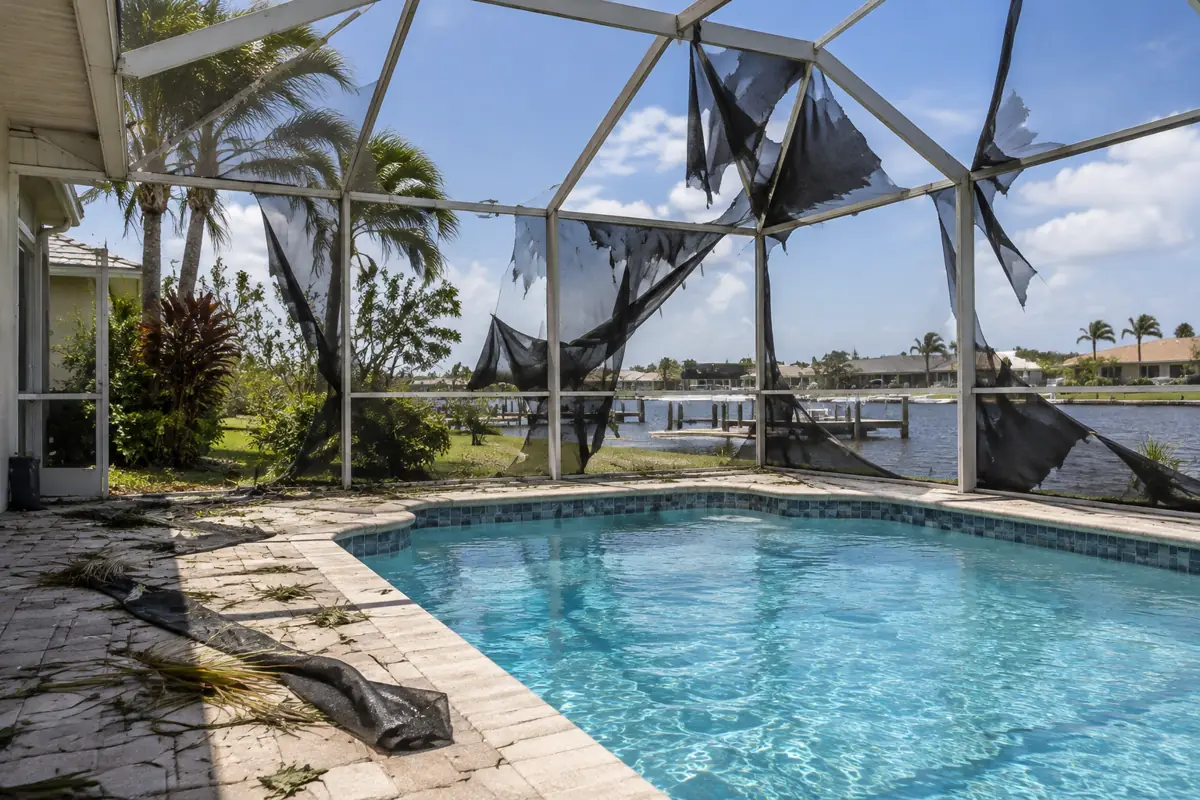
- Design loads (requirement): members supporting screened enclosures are designed for wind in two orthogonal directions using Table 2002.4, plus a 300 lb vertical load on any 1 ft of a primary member (FBC 2023, Chapter 20, Section 2002.4).
- Member thickness (requirement): extruded aluminum walls at least 0.040 inch thick (FBC 2023, Chapter 20, Section 2002.3.1).
- Removable panels (requirement): vinyl, tempered glass and acrylic panels must be removable and carry a decal saying they shall be removed when wind exceeds 75 mph (FBC 2023, Chapter 20, Section 2002.3.3).
- Design speed (requirement): the residential code allows screen enclosures to be designed under Section 2002 with Risk Category I wind speeds from Figure 1609.3(4) (FBC Residential 2023, R301.2.1.1.1).
- Screen-removal designs (requirement where used): designated screens must be completely cut when winds above 75 mph are forecast; the frame must still meet the 110 mph column of Table 2002.4 with all screens in place; designs need signed and sealed site-specific engineering (FBC 2023, Chapter 20, Section 2002.7).
- Pool barrier link (requirement): where such an enclosure is the pool barrier under Section 454.2.17, barrier height must be kept when panels are removed or cut (FBC 2023, Chapter 20, Section 2002.7).
- Design guide (accepted practice): the AAF Guide to Aluminum Construction in High Wind Areas is accepted as conforming engineering practice (FBC 2023, Chapter 20, Section 2002.4.1).
| Ultimate design wind speed (mph) | Windward, Exposure B (psf) | Windward, Exposure C (psf) | Windward, Exposure D (psf) | Leeward, Exposure C (psf) | Vertical on screen, Exposure C (psf) | Vertical on solid surfaces, Exposure C (psf) |
|---|---|---|---|---|---|---|
| 110 | 17 | 24 | 28 | 18 | 7 | 24 |
| 120 | 20 | 28 | 33 | 22 | 8 | 29 |
| 130 | 23 | 32 | 38 | 26 | 9 | 34 |
| 140 | 27 | 38 | 44 | 29 | 11 | 39 |
| 150 | 31 | 43 | 51 | 34 | 12 | 45 |
| 160 | 36 | 49 | 58 | 39 | 14 | 51 |
| 170 | 40 | 56 | 66 | 44 | 15 | 58 |
Source: FBC 2023, Chapter 20, Table 2002.4 (strength design; mean enclosure roof height 30 ft; 20x20x0.013 in. mesh). Download CSV
Strength-design values for 20x20x0.013 in. mesh.
Source: Florida Building Code, Building, 8th edition (2023), Table 2002.4. Download chart data (CSV)
Design wind speeds for pool cages in Florida pool markets
Because Florida’s residential code lets screen enclosures use Risk Category I wind speeds, a pool cage can be designed for a lower wind than the house it adjoins. Across 10 Florida cities outside Miami-Dade and Broward the gap is 9 to 15 mph.
| City | County | HVHZ | Home design speed, Risk Category II (mph) | Screen enclosure design speed, Risk Category I (mph) | Gap (mph) | Risk Category II contours bracketing the point (mph) | Risk Category I contours bracketing the point (mph) | Basis |
|---|---|---|---|---|---|---|---|---|
| Miami | Miami-Dade | Yes | 175 | 165 | 10 | 160 to 170 | 150 to 160 | FBC 1620.2 fixed values; HVHZ enclosures are designed under Section 1622 and the risk category used was not verified |
| Fort Lauderdale | Broward | Yes | 170 | 156 | 14 | 160 to 170 | 150 to 160 | FBC 1620.2 fixed values; HVHZ enclosures are designed under Section 1622 and the risk category used was not verified |
| West Palm Beach | Palm Beach | No | 167 | 153 | 14 | 160 to 170 | 150 to 160 | Interpolated from ASCE 7-22 contours (PC&S) |
| Port St. Lucie | St. Lucie | No | 157 | 146 | 11 | 150 to 160 | 140 to 150 | Interpolated from ASCE 7-22 contours (PC&S) |
| Naples | Collier | No | 166 | 151 | 15 | 160 to 170 | 150 to 160 | Interpolated from ASCE 7-22 contours (PC&S) |
| Cape Coral | Lee | No | 156 | 144 | 12 | 150 to 160 | 140 to 150 | Interpolated from ASCE 7-22 contours (PC&S) |
| Fort Myers | Lee | No | 154 | 143 | 11 | 150 to 160 | 140 to 150 | Interpolated from ASCE 7-22 contours (PC&S) |
| Sarasota | Sarasota | No | 151 | 139 | 12 | 150 to 160 | 130 to 140 | Interpolated from ASCE 7-22 contours (PC&S) |
| St. Petersburg | Pinellas | No | 145 | 135 | 10 | 140 to 150 | 130 to 140 | Interpolated from ASCE 7-22 contours (PC&S) |
| Tampa | Hillsborough | No | 141 | 131 | 10 | 140 to 150 | 130 to 140 | Interpolated from ASCE 7-22 contours (PC&S) |
| Orlando | Orange | No | 143 | 133 | 10 | 140 to 150 | 130 to 140 | Interpolated from ASCE 7-22 contours (PC&S) |
| Jacksonville | Duval | No | 125 | 116 | 9 | 120 to 130 | 110 to 120 | Interpolated from ASCE 7-22 contours (PC&S) |
Sources: FBC 2023, Chapter 16, Section 1620.2 (Miami-Dade, Broward); UF GeoPlan wind contours for FBC Figures 1609.3(1) and 1609.3(4), ASCE 7-22 (final report); place points from U.S. Census Bureau; PC&S interpolation. Download CSV
Miami and Fort Lauderdale use FBC 1620.2 fixed values; whether HVHZ enclosures are designed as Risk Category I was not verified. Other cities are interpolated at one point; local wind lines and site exposure govern.
Source: FBC 2023 Section 1620.2 (Miami-Dade, Broward); UF GeoPlan ASCE 7-22 contours for FBC Figure 1609.3; PC&S interpolation. Download chart data (CSV)
For the cities with PC&S city pages, Risk Category I and home speeds are about 131 and 141 mph in Tampa and 133 and 143 mph in Orlando (PC&S interpolation). Miami’s values are fixed at 165 mph (Risk Category I) and 175 mph (homes) by FBC 1620.2; HVHZ pool cages are designed under Section 1622, and the risk category Miami-Dade applies to them was not verified. Builders in those markets are listed on the Miami pool builders and Tampa pool builders pages.
Houston has no state wind map in this data set. The Houston Public Works criteria sheet, written for the 2012 codes, lists 139 mph for Risk Category II and 130 mph for Risk Category I; current Houston values were not verified. The City of Houston is outside the TDI windstorm program area (Texas Department of Insurance).
Miami-Dade and Broward: the High-Velocity Hurricane Zone
In the HVHZ the code replaces map lookups with fixed county wind speeds and adds its own screen enclosure section, Section 1622.
- The HVHZ consists of Broward and Miami-Dade counties (FBC 2023, Chapter 2).
- Miami-Dade design wind speeds are 165, 175, 186 and 195 mph for Risk Categories I to IV; Broward’s are 156, 170, 180 and 185 mph (FBC 2023, Chapter 16, Section 1620.2).
- All HVHZ structures are Exposure C unless Exposure D applies (FBC 2023, Chapter 16, Section 1620.3).
- HVHZ screen enclosures take ASCE 7 loads with shape factors of 1.3 on walls and 0.7 on roofs; designs under the AAF Guide must be signed and sealed by a Florida architect or engineer (FBC 2023, Chapter 16, Section 1622.1).
- Vinyl and acrylic windbreaker panels in the HVHZ must be removable and labelled for removal above 75 mph (FBC 2023, Chapter 16, Section 1622.2).
Texas, Louisiana and the other Gulf and Atlantic states
Outside Florida, the residential codes checked do not single out screen enclosures. Coastal Texas ties wind rules to insurance eligibility, while Louisiana applies a statewide IRC.
In coastal Texas, wind construction rules run through the Texas Department of Insurance. Structures in the designated catastrophe areas must be built and inspected to TDI’s adopted codes to qualify for TWIA wind and hail coverage; inspections began on January 1, 1988 (Texas Department of Insurance). Since April 1, 2026, certificates must follow the 2024 IRC or IBC (Texas Department of Insurance).
Louisiana enforces the 2021 IRC statewide for new construction under the State Uniform Construction Code (Louisiana LSUCCC). Mississippi requires the five coastal counties of Jackson, Harrison, Hancock, Stone and Pearl River to enforce the wind and flood rules of the 2003 IRC and IBC (Miss. Code 17-2-1). Alabama uses the 2015 IRC as modified (Alabama Admin. Code), Georgia the 2024 IRC with amendments (Georgia DCA), South Carolina the 2021 IRC since January 1, 2023 (South Carolina LLR), and North Carolina its 2018 code (NC OSFM).
How Citizens and TWIA treat pool screen enclosures
Florida’s and Texas’s state-created property insurers both carve out pool screen enclosures. Florida’s Citizens excludes them outright; Texas’s TWIA covers them only when listed and certified.
Citizens Property Insurance’s HO-3 worksheet (11/25) states that aluminum-framed screened enclosures and screen pool cages open to the weather are not covered under Coverage A or B, and that this cannot be changed (Citizens Property Insurance). The wind-only HW-2 worksheet (10/25) carries the same wording (Citizens Property Insurance). The pool itself is covered: Coverage A if it adjoins the dwelling, Coverage B if separated by clear space, Coverage C if above ground (Citizens Property Insurance).
In Texas, the TWIA dwelling policy lists metal screen enclosures and their contents as property not covered unless specifically described in the Declarations (TWIA). A 2013 TDI memorandum explains that a listed enclosure built on or after January 1, 1988 needs a WPI-8 windstorm certificate (Texas Department of Insurance).
Official pool storm guidance: where agencies agree and where they differ
Apart from Florida’s enclosure panel rules, no code or statute text found in this review tells a homeowner what to do with a pool before a hurricane. The guidance from Florida agencies and the state pool association agrees on keeping water in the pool and adding chlorine, and disagrees on pump power and patio furniture.
| Action | Status | Florida Building Code | FSPA | UF/IFAS Extension | Broward County | City of Tamarac | Lee County EM | Miami-Dade / FL DOH | Notes |
|---|---|---|---|---|---|---|---|---|---|
| Keep water in the pool; do not drain before the storm | Guidance | Not addressed | Yes | Yes | Partial | Partial | Yes | Not addressed | Broward (2015) and Tamarac allow lowering by no more than 1 to 2 feet; FSPA and UF/IFAS cite hydrostatic pressure and 'popping' |
| Shock or super chlorinate before the storm | Guidance | Not addressed | Yes | Yes | Yes | Not addressed | Yes | Not addressed | Broward: add extra chlorine |
| Turn off power to pool equipment before the storm | Guidance | Not addressed | Yes | No | Yes | Yes | Not addressed | Not addressed | UF/IFAS: keep the pump running while power is on; FSPA: turn off breakers and cover equipment |
| Remove or wrap the pump motor | Guidance | Not addressed | Not addressed | Not addressed | Yes | Yes | Not addressed | Not addressed | |
| Put patio furniture in the pool | Guidance | Not addressed | Partial | No | No | Not addressed | Not addressed | Not addressed | FSPA: only if it cannot be stored inside; UF/IFAS: never; Broward: remove loose items from the pool area |
| Remove vinyl or acrylic enclosure panels above 75 mph | Requirement (FBC 2002.3.3, 1622.2.1) | Yes | Not addressed | Not addressed | Not addressed | Not addressed | Not addressed | Not addressed | Code requires removable panels and a decal; Orange County requires the decal note on plans |
| Cut designated screen panels when winds above 75 mph are forecast | Requirement where designed under FBC 2002.7 | Partial | Not addressed | Not addressed | Not addressed | Not addressed | Not addressed | Not addressed | Applies only to enclosures engineered with screen-removal alternates; contractor supplies one-time replacement screen |
| Restore a damaged pool barrier as a priority after the storm | Guidance (barrier itself is law) | Not addressed | Not addressed | Not addressed | Not addressed | Not addressed | Not addressed | Yes | Miami-Dade: temporary safety mesh until repaired |
| Do not swim until the pool is cleaned and fully functional | Guidance | Not addressed | Partial | Partial | Not addressed | Not addressed | Not addressed | Yes | Florida DOH-Pasco list: debris cleared, filtration running, drain covers visible, disinfectant and pH at safe levels |
| Have a professional check motors exposed to water | Guidance | Not addressed | Yes | Not addressed | Not addressed | Not addressed | Not addressed | Not addressed | FSPA: repairs only by a licensed pool contractor |
Sources: FBC 2023, Chapter 20; Florida Swimming Pool Association; UF/IFAS Extension; Broward County (2015 guide); City of Tamarac; Lee County Emergency Management (2022); Miami-Dade County; Florida DOH-Pasco; Orange County. Download CSV
- Draining: Florida Swimming Pool Association, UF/IFAS Extension and Lee County Emergency Management say do not drain; Broward County and City of Tamarac allow lowering the water by no more than 1 to 2 feet. The stated risk is hydrostatic pressure lifting an empty shell.
- Chemicals: FSPA, UF/IFAS, Broward and Lee County advise shocking or super chlorinating before the storm. CDC guidance for pool operators says store chemicals below 95 F, keep them dry and keep them from mixing.
- Power: FSPA, Broward and Tamarac say turn off power to pool equipment; Broward and Tamarac also say remove or wrap the pump motor. UF/IFAS says keep the pump running while power is on.
- Furniture: FSPA allows placing furniture gently in the pool if it cannot be stored; UF/IFAS says never. Ready.gov advises bringing outside furniture in.
- After the storm: Miami-Dade says repair a damaged pool barrier as a priority and add chlorine if the pool is not running (Miami-Dade County); the Florida Department of Health in Pasco County says avoid swimming until the pool is clean and fully functional (Florida DOH-Pasco). Shock-hazard data are in the PC&S pool electrocution statistics report, and storm-damaged equipment is covered on the pool repair page.
Permits for pool cages in Florida
A new or rebuilt screen enclosure is a building under Florida law, so it needs a permit. Counties add their own submittal rules, often including sealed engineering.
- Florida law makes it unlawful to construct, alter or repair any building without a permit unless the law provides otherwise (Fla. Stat. 553.79); the code defines a screen enclosure as a building or part of one (FBC 2023, Chapter 2).
- Hillsborough County requires screen enclosure plans signed and sealed by a Florida registered architect or engineer (Hillsborough County).
- Collier County permits screen enclosures as an aluminum structure work item and requires a final spot survey (Collier County).
- The City of Tampa lists residential screen enclosures as a permit type (City of Tampa); Orange County requires the 75 mph removable-panel decal note on plans (Orange County).
- General permit steps are on the pool permits page.
The 2026 hurricane season and the code calendar
The 2026 Atlantic season has been quiet so far, in line with NOAA’s below-normal outlook. The bigger change for pool owners in Florida is the 9th edition code that starts on December 31, 2026.
- The Atlantic hurricane season runs June 1 to November 30 and peaks on September 10 (NOAA NHC).
- A 1991 to 2020 average season has 14 named storms, 7 hurricanes and 3 major hurricanes (NOAA NHC).
- NOAA’s May 21, 2026 outlook called for 8 to 14 named storms and 3 to 6 hurricanes, with a 55% chance of a below-normal season (NOAA); the August 6 update cut that to 7 to 13 named storms and 2 to 6 hurricanes, with a 75% chance of below normal (NOAA).
- Through October 8, 2026 the season had 9 named storms and 1 hurricane (NOAA NHC).
- The 2025 season produced no continental US hurricane impacts (NOAA AOML).
How the states compare
Hurricane landfalls per pool state
Which pool states take the most hurricane landfalls?
Count of distinct HURDAT2 storms with a landfall (L) record at hurricane status, assigned to states by Census boundaries; 1991 to 2025Inputs: fact rows #1 to #5; derived D1 to D9, D10
Limitations: Landfalls only; storms crossing two states count in each; 1956 to 1990 excluded because HURDAT2 does not flag those landfalls; border points assigned by geometry.
Screen enclosure rule matrix
Which state codes regulate pool screen enclosures for wind?
Text search for 'screen enclosure' in each state's adopted residential code Chapter 3, plus reading of FBC 2002, 1620 and 1622Inputs: fact rows #19 to #42, #63 to #73; derived D46
Limitations: Chapter 3 only; local amendments not searched; Texas and Mississippi lack one statewide text.
Design wind speeds for pool cages vs homes
How much lower is the design wind for a pool cage than for the house?
Risk Category II speed minus Risk Category I speed at each city point; HVHZ from FBC 1620.2, elsewhere linear interpolation between ASCE 7-22 contoursInputs: fact rows #33, #36, #37, #48 to #50; derived D30 to D43
Limitations: One point per city; local wind lines and exposure govern; the Risk Category I basis comes from FBC Residential R301.2.1.1.1.1 and is permissive; the HVHZ category for enclosures was not verified.
Pressure gap between pool cages in different Florida markets
How much more wind pressure must a southeast Florida pool cage resist than a Tampa or Jacksonville one?
Exposure C windward pressure from Table 2002.4, interpolated at each city's Risk Category I speed; ratioInputs: fact row #20; derived D32, D39, D41, D44
Limitations: Assumes Exposure C at both sites; linear interpolation between table columns.
Consolidated official pool storm guidance
On what do official sources agree?
Tally of Yes / Partial / No across six non-code sources for each actionInputs: fact rows #74 to #84; derived D47
Limitations: Florida-heavy source set; Broward guide is the 2015 edition; guidance is not law.
What the statutes show
- Louisiana had 15 hurricanes make landfall from 1991 to 2025, 6 of them major, second to Florida (PC&S count of NOAA NHC HURDAT2).
- Texas had 9 hurricanes make landfall from 1991 to 2025; the strongest was Harvey in 2017 at 115 knots, about 130 mph (PC&S count of NOAA NHC HURDAT2).
- Georgia had no hurricane landfalls from 1991 to 2025 in HURDAT2, although the AOML list records 4 Georgia hurricane impacts in that span, mostly inland.
- 45 of the 58 continental US hurricane landfalls from 1991 to 2025 (77.6%) touched Texas, Louisiana, Mississippi, Alabama or Florida (PC&S count of NOAA NHC HURDAT2).
- From 2016 to 2025, Florida had 9 hurricanes make landfall and Louisiana had 7, out of 25 continental US hurricanes (PC&S count of NOAA NHC HURDAT2).
- Florida recorded 17 Category 4 or 5 hurricane impacts from 1851 to 2025, per the NOAA AOML list (PC&S count).
- In Miami-Dade County the 2023 Florida Building Code fixes design wind speeds at 165 mph for Risk Category I and 175 mph for Risk Category II; Broward uses 156 mph and 170 mph (FBC 2023, Chapter 16, Section 1620.2).
- Florida’s Table 2002.4 sets windward pressure on screen enclosures at 24 psf at 110 mph and 56 psf at 170 mph for Exposure C, a 2.33-fold range (FBC 2023, Chapter 20).
- At Risk Category I speeds, a West Palm Beach screen enclosure (153 mph) carries an interpolated Exposure C windward pressure of 44.8 psf, 37% more than a Tampa enclosure at 131 mph (32.6 psf) and 1.7 times a Jacksonville enclosure at 116 mph (26.4 psf) (PC&S calculation from FBC Table 2002.4).
- Screen enclosures designed under Florida’s screen-removal alternate (FBC 2002.7, 2023) must have designated panels cut when winds above 75 mph are forecast, and the contractor must supply one-time replacement screen (FBC 2023, Chapter 20).
- Since April 1, 2026, TDI windstorm certificates in coastal Texas must be certified to the 2024 IRC or IBC (Texas Department of Insurance); the program covers 14 counties plus five Harris County cities east of State Highway 146 (Texas Department of Insurance).
- As of October 8, 2026 the Atlantic season had produced 9 named storms, 1 hurricane and no major hurricanes, with accumulated cyclone energy 88% below the 1991 to 2020 normal (NOAA NHC).
- Florida law requires insurers to offer hurricane deductibles of $500, 2%, 5% and 10% of dwelling limits, applied once per calendar year (Fla. Stat. 627.701).
State-specific questions
Should I drain my pool before a hurricane?
No, according to the Florida Swimming Pool Association, UF/IFAS Extension and Lee County Emergency Management, which all say do not drain; FSPA explains that the water’s weight keeps the shell from lifting out of saturated ground. Broward County (2015 guide) and City of Tamarac allow lowering the water by no more than 1 to 2 feet.
Does homeowners insurance cover pool screen enclosures?
Not at Citizens Property Insurance in Florida: its HO-3 (11/25) and HW-2 (10/25) worksheets say screen pool cages are not covered and the exclusion cannot be changed (Citizens Property Insurance). TWIA in coastal Texas excludes metal screen enclosures unless listed on the Declarations (TWIA). Private policies were not verified.
How strong are pool screen enclosures?
In Florida they are engineered to Table 2002.4 pressures, from 24 psf at 110 mph to 56 psf at 170 mph for Exposure C windward walls (FBC 2023, Chapter 20), and the residential code allows them to use Risk Category I wind speeds (FBC Residential 2023, R301.2.1.1.1). Outside Miami-Dade and Broward that allows design speeds of 116 to 153 mph across 10 Florida cities, 9 to 15 mph below the homes they adjoin (PC&S calculation).
What do you do with a pool during a hurricane?
Stay indoors and away from the pool (Florida Swimming Pool Association). Sources differ on the pump: UF/IFAS Extension says keep it running while power is on, while Broward County and City of Tamarac say turn off power to pool equipment before the storm.
Do pool cages need permits in Florida?
Yes. Florida law requires a permit to construct or repair any building (Fla. Stat. 553.79), and the Florida Building Code defines a screen enclosure as a building or part of one (FBC 2023, Chapter 2). Hillsborough County also requires signed and sealed plans (Hillsborough County).
Questions and answers
Which state gets the most hurricanes?
Florida. It had 21 hurricanes make landfall from 1991 to 2025 (PC&S count of NOAA NHC HURDAT2) and 126 hurricane impacts from 1851 to 2025 (NOAA AOML, PC&S count).
At what wind speed must pool enclosure panels be removed in Florida?
Above 75 mph. FBC Section 2002.3.3 (2023) requires vinyl, tempered glass and acrylic panels to be removable, with a decal saying they shall be removed when wind exceeds 75 mph (FBC 2023, Chapter 20).
Should I cut my pool cage screens before a hurricane?
Only if the enclosure was engineered under FBC Section 2002.7; those designs require designated panels to be cut when winds above 75 mph are forecast, and the contractor must supply one-time replacement screen (FBC 2023, Chapter 20). Standard enclosures are designed with all screens in place.
What wind speeds apply to pool cages in Miami-Dade County?
FBC Section 1620.2 (2023) fixes 165 mph for Risk Category I and 175 mph for Risk Category II structures in Miami-Dade (FBC 2023, Chapter 16). Pool cages there are designed under HVHZ Section 1622, with ASCE 7 loads and shape factors of 1.3 on walls and 0.7 on roofs; the risk category Miami-Dade applies to them was not verified.
Should I put patio furniture in the pool before a storm?
Sources disagree. The Florida Swimming Pool Association allows it gently if furniture cannot be stored indoors; UF/IFAS Extension says never, citing corrosion and stains. Broward County says remove loose items from the pool area (Broward County).
Should I turn off the pool pump before a hurricane?
Broward County, City of Tamarac and the Florida Swimming Pool Association say turn off power to pool equipment; UF/IFAS Extension says keep the pump running while power is on. Before restarting, FSPA says confirm breakers are off and have flooded motors checked.
When is hurricane season and when does it peak?
June 1 to November 30, with a peak on September 10 (NOAA NHC).
What changes for pool cages in the 2026 Florida Building Code?
From December 31, 2026, screen enclosure members with spline grooves must be 6005-T5 aluminum or stronger, with the alloy documented by the supplier (Florida Building Commission; Miami-Dade RER).
Is it safe to swim in a pool after a hurricane?
Not until it is cleaned and fully functional, according to the Florida DOH-Pasco (October 10, 2024): debris cleared, filtration and chemical treatment running, drain covers visible and disinfectant and pH at safe levels.
How active is the 2026 hurricane season?
Below normal so far: 9 named storms and 1 hurricane through October 8, 2026, with accumulated cyclone energy 88% below the 1991 to 2020 normal (NOAA NHC).
Recent law changes
- NHC season table: 9 named storms and 1 hurricane (Isaias, active) in the 2026 Atlantic season to date (NOAA NHC).
- Miami-Dade RER confirmed the Florida Building Code 9th edition (2026) applies to permit applications from December 31, 2026 (Miami-Dade RER).
- NHC released HURDAT2 for 1851 to 2025; this report uses that file (NOAA NHC HURDAT2).
- NOAA AOML revised its US hurricane impact list to include reanalyzed 1971 to 1975 seasons and lists no 2025 US hurricane (NOAA AOML).
- NOAA kept its below-normal outlook: 7 to 13 named storms, 2 to 6 hurricanes, 75% chance of a below-normal season (NOAA).
- TDI began requiring 2024 IRC or IBC certification for Texas windstorm certificates (Texas Department of Insurance).
How we read the statutes
- Downloaded the newest HURDAT2 Atlantic file (1851 to 2025, dated 2026-09-23) and its format notes from NHC.
- Extracted every landfall (L) record; assigned each to a state with 2024 Census state boundaries (point in polygon, or nearest state within 40 km); counted distinct hurricanes per state for 1991 to 2025 and 1851 to 1955 (scripts/landfalls.py).
- Parsed NOAA AOML’s 1851 to 2025 continental US hurricane impact list and counted storms and categories per state (scripts/aoml_impacts.py).
- Read the 2023 Florida Building Code chapters 2, 16 and 20 and FBC Residential R301.2.1.1 on UpCodes, the 9th edition workplan and analysis of changes, and the adopted code texts or adoption pages for LA, MS, AL, GA, SC, NC and Texas (TDI).
- Searched each available state residential code Chapter 3 for the phrase ‘screen enclosure’.
- Interpolated Risk Category I and II wind speeds at 12 Florida city points from the UF GeoPlan ASCE 7-22 contour files behind FBC Figure 1609.3 (scripts/wind_speeds.py); used FBC 1620.2 fixed values in Miami-Dade and Broward.
- Read Citizens HO-3 and HW-2 coverage worksheets, the TWIA dwelling policy and TDI documents for screen enclosure treatment.
- Collected pool storm guidance from FSPA, UF/IFAS Extension, Broward County, Tamarac, Lee County, Miami-Dade County, Florida DOH, CDC and Ready.gov and tabulated agreement (scripts/build_tables.py).
Included: Code text, statutes, insurer policy forms, government datasets and agency guidance opened on 2026-10-08. Trade association (FSPA) and university extension (UF/IFAS) guidance included as Tier 2 and labelled as guidance.
Excluded: Contractor and retailer blog advice, social media posts, and any rule not found in opened text. Pool barrier, permit cost and contractor licensing details are covered by other PC&S reports.
Conflicting numbers: Where guidance conflicts (pump power, furniture in the pool, lowering water), all positions are shown with sources rather than picking one. Landfall (HURDAT2) and impact (AOML) counts are shown side by side because they measure different things.
Derived metrics: All counts and interpolations are reproducible from raw/ with the scripts in scripts/; formulas and input rows are in derived.csv.
Caveats
- HURDAT2 does not flag 1956 to 1990 landfalls, so landfall counts cover 1991 to 2025 and 1851 to 1955 only.
- Landfall counts miss hurricanes that brought hurricane winds without the center crossing a state’s coast; the AOML impact counts cover those.
- Wind speeds outside the HVHZ are interpolated at one point per city and are not a substitute for the local building department’s value.
- The Risk Category I basis for screen enclosures comes from FBC Residential R301.2.1.1.1.1; enclosures on commercial or multi-family sites may follow other rules.
- Texas, Mississippi and non-Florida insurer treatment of screen enclosures could not be fully verified.
- Broward County’s pool guidance is from its 2015 guide and Lee County’s from its 2022 plan; newer editions were not opened.
Method last reviewed October 8, 2026.
For reporters and policy researchers
Quotable comparisons
- Florida had 21 hurricanes make landfall from 1991 to 2025, more than any other US state (PC&S count of NOAA HURDAT2). (NOAA National Hurricane Center)
- Florida took 12 of the 21 major hurricane landfalls on the continental US from 1991 to 2025 (PC&S count of NOAA HURDAT2). (NOAA National Hurricane Center)
- Florida appears in 126 of the 309 hurricanes that brought hurricane conditions to the continental US from 1851 to 2025 (PC&S count of NOAA AOML data). (NOAA AOML Hurricane Research Division)
- Florida’s 2023 building code requires removable pool enclosure panels to carry a decal saying they must come off when wind exceeds 75 mph. (Florida Building Commission (via UpCodes))
- In 10 Florida cities outside Miami-Dade and Broward, the 2023 Florida Building Code allows pool screen enclosures to be designed for 9 to 15 mph less wind than homes (PC&S calculation). (Florida Building Commission (via UpCodes))
- Citizens Property Insurance, Florida’s state-created insurer, does not cover screen pool cages under its 2025 HO-3 and HW-2 forms. (Citizens Property Insurance Corporation)
- Of six coastal state residential codes checked in October 2026, only Florida’s contains screen enclosure wind provisions. (Florida Building Commission (via UpCodes))
Statutes to cite
- HURDAT2 Atlantic best track, 1851 to 2025 (hurdat2-1851-2025-092326.txt), NOAA National Hurricane Center
- Continental United States Hurricane Impacts/Landfalls 1851-2025, NOAA AOML Hurricane Research Division
- 2023 Florida Building Code, Building, Chapter 20 Aluminum, Florida Building Commission (via UpCodes)
- 2023 Florida Building Code, Building, Chapter 16 Structural Design, Florida Building Commission (via UpCodes)
- HO-3 Coverage Worksheet (11/25), Citizens Property Insurance Corporation
- TWIA Dwelling Policy, Windstorm and Hail (2020.04), Texas Windstorm Insurance Association
Summary for editors
A Pool Construction & Service review of building codes, insurance forms and NOAA storm records, updated October 8, 2026, finds that pool hurricane preparation in the US rests mostly on guidance rather than law. Of six coastal state residential codes searched, only Florida’s sets wind rules for pool screen enclosures. The Florida code lets those enclosures be designed for Risk Category I wind speeds, 9 to 15 mph below home speeds in 10 Florida cities outside the HVHZ, and requires removable panels to come off above 75 mph. Citizens Property Insurance does not cover screen pool cages, and the Texas Windstorm Insurance Association covers them only when listed. NOAA HURDAT2 data show 21 hurricanes made landfall in Florida from 1991 to 2025, ahead of Louisiana with 15. Official Florida guidance agrees on keeping water in the pool and adding chlorine but differs on whether to cut pump power. The Florida Building Code 9th edition takes effect December 31, 2026.
Headline options
- Florida took 21 hurricane landfalls since 1991, most in the US, and only its code regulates pool cages for wind
- Florida code lets pool cages be designed for 9 to 15 mph less wind than the homes they attach to
- Florida's state insurer does not cover screen pool cages; Texas's covers them only if listed
- Do not drain the pool: what Florida agencies agree on before a hurricane, and where they split
- New Florida code rule for pool cage aluminum starts December 31, 2026
Suggested citation
Pool Construction & Service. "Pool Hurricane Preparation: Code Rules, Screen Enclosure Standards and Storm Exposure by State, 2026." PC&S Research Desk, October 8, 2026. https://poolconstructionandservice.com/research/pool-hurricane-rules/
License
The data tables and charts in this report are licensed under CC BY 4.0. Reuse them with this attribution: “Source: Pool Construction & Service (poolconstructionandservice.com), Pool Hurricane Preparation: Code Rules, Screen Enclosure Standards and Storm Exposure by State, 2026.” Figures from third-party sources remain subject to their publishers’ terms.
Matrix data
- Pool and screen enclosure hurricane rules by jurisdiction, October 2026 CSV
- Hurricanes making landfall by state, 1991 to 2025 and 1851 to 1955 (HURDAT2) CSV
- Hurricane impacts by state and category, 1851 to 2025 (AOML) CSV
- Home and screen enclosure design wind speeds, 12 Florida cities, 2023 FBC CSV
- FBC Table 2002.4 screen enclosure design pressures, 2023 CSV
- Official pool hurricane guidance by source, Florida, 2026 CSV
- Full fact sheet with sources and limitations CSV
Source hierarchy
Tier 1: primary and government sources (49)
- NOAA National Hurricane Center: HURDAT2 Atlantic best track, 1851 to 2025 (hurdat2-1851-2025-092326.txt)
- NOAA National Hurricane Center: HURDAT2 format description (Atlantic)
- NOAA AOML Hurricane Research Division: Continental United States Hurricane Impacts/Landfalls 1851-2025
- U.S. Census Bureau: Cartographic Boundary Files, states, 2024 (500k KML)
- U.S. Census Bureau: 2024 Gazetteer Files, places
- Florida Building Commission (via UpCodes): 2023 Florida Building Code, Building, Chapter 20 Aluminum
- Florida Building Commission (via UpCodes): 2023 Florida Building Code, Building, Chapter 16 Structural Design
- Florida Building Commission (via UpCodes): 2023 Florida Building Code, Building, Chapter 2 Definitions
- Florida Building Commission (via UpCodes): 2023 FBC Residential R301.2.1.1 Wind Design Required
- Florida Building Commission (via UpCodes): 2023 FBC Residential, Chapter 3 Building Planning
- Florida Building Commission: 9th Edition (2026) FBC Code Update Development Tasks (June 2026)
- Florida Building Commission: Analysis of Changes, 9th Edition (2026) FBC Building
- Miami-Dade County RER: Florida Building Code, Ninth Edition (2026) update takes effect Dec. 31
- University of Florida GeoPlan Center: Final Report: Wind Speed Line Maps for the FBC 8th Edition (2023)
- University of Florida GeoPlan Center: FBC 2023 wind zones GIS data, Risk Categories I to IV (ASCE 7-22)
- Florida Legislature: Florida Statutes 553.79, Permits
- Florida Legislature: Florida Statutes 627.701, Hurricane deductibles
- Hillsborough County: Residential Screen Enclosure and Glass Room Additions
- City of Tampa: Residential Screen Enclosures
- Collier County: Aluminum Structures (PRAS)
- Orange County Government: A Guide for Residential Plan Approval
- City of Houston Public Works: Building Code Design Criteria
- Citizens Property Insurance Corporation: HO-3 Coverage Worksheet (11/25)
- Citizens Property Insurance Corporation: HW-2 Coverage Worksheet, Wind-Only (10/25)
- Texas Windstorm Insurance Association: TWIA Dwelling Policy, Windstorm and Hail (2020.04)
- Texas Department of Insurance: 2013 Screened Enclosures Explanatory Memorandum
- Texas Department of Insurance: What is the Windstorm Inspection Program?
- Texas Department of Insurance: Adopted Building Codes (windstorm program)
- Louisiana State Uniform Construction Code Council: Uniform Construction Code Law and Rules and Regulations (May 20, 2026)
- Alabama Legislative Services Agency: Alabama Administrative Code chapter 305-2-4
- Georgia Department of Community Affairs: Current State Minimum Codes for Construction
- South Carolina LLR Building Codes Council: Building Codes in Effect for South Carolina
- North Carolina Office of State Fire Marshal: Codes: Current and Past
- LSUCCC / ICC (via UpCodes): Louisiana Residential Code 2021, Chapter 3
- Georgia DCA / ICC (via UpCodes): Georgia Residential Code 2024, Chapter 3
- SC Building Codes Council / ICC (via UpCodes): South Carolina Residential Code 2021, Chapter 3
- Alabama / ICC (via UpCodes): Alabama Residential Code 2015, Chapter 3
- NC Building Code Council / ICC (via UpCodes): North Carolina Residential Code 2018, Chapter 3
- NOAA National Hurricane Center: Tropical Cyclone Climatology
- NOAA: NOAA predicts below-normal 2026 Atlantic hurricane season
- NOAA: NOAA maintains prediction for below-normal Atlantic hurricane season
- NOAA National Hurricane Center: 2026 Atlantic Hurricane Season (Tropical Weather Summary table)
- Miami-Dade County: After a Hurricane
- Florida Department of Health in Pasco County: DOH-Pasco Urges Residents to Avoid Beaches and Pools After Hurricane Milton
- Broward County: The Official Broward County Hurricane Preparedness Guide (2015)
- City of Tamarac: Hurricane Tips: Before the Storm
- Lee County Emergency Management: Family Emergency Plan (2022)
- Centers for Disease Control and Prevention: Pool Chemical Safety
- FEMA Ready.gov: Hurricanes
Tier 2: trade bodies, public companies, market research (3)
Statutes and official sources
- NOAA National Hurricane Center. HURDAT2 Atlantic best track, 1851 to 2025 (hurdat2-1851-2025-092326.txt). Accessed 2026-10-08.
- NOAA National Hurricane Center. HURDAT2 format description (Atlantic). Accessed 2026-10-08.
- NOAA AOML Hurricane Research Division. Continental United States Hurricane Impacts/Landfalls 1851-2025. Accessed 2026-10-08.
- U.S. Census Bureau. Cartographic Boundary Files, states, 2024 (500k KML). Accessed 2026-10-08.
- U.S. Census Bureau. 2024 Gazetteer Files, places. Accessed 2026-10-08.
- Florida Building Commission (via UpCodes). 2023 Florida Building Code, Building, Chapter 20 Aluminum. Accessed 2026-10-08.
- Florida Building Commission (via UpCodes). 2023 Florida Building Code, Building, Chapter 16 Structural Design. Accessed 2026-10-08.
- Florida Building Commission (via UpCodes). 2023 Florida Building Code, Building, Chapter 2 Definitions. Accessed 2026-10-08.
- Florida Building Commission (via UpCodes). 2023 FBC Residential R301.2.1.1 Wind Design Required. Accessed 2026-10-08.
- Florida Building Commission (via UpCodes). 2023 FBC Residential, Chapter 3 Building Planning. Accessed 2026-10-08.
- Florida Building Commission. 9th Edition (2026) FBC Code Update Development Tasks (June 2026). Accessed 2026-10-08.
- Florida Building Commission. Analysis of Changes, 9th Edition (2026) FBC Building. Accessed 2026-10-08.
- Miami-Dade County RER. Florida Building Code, Ninth Edition (2026) update takes effect Dec. 31. Accessed 2026-10-08.
- University of Florida GeoPlan Center. Final Report: Wind Speed Line Maps for the FBC 8th Edition (2023). Accessed 2026-10-08.
- University of Florida GeoPlan Center. FBC 2023 wind zones GIS data, Risk Categories I to IV (ASCE 7-22). Accessed 2026-10-08.
- Florida Legislature. Florida Statutes 553.79, Permits. Accessed 2026-10-08.
- Florida Legislature. Florida Statutes 627.701, Hurricane deductibles. Accessed 2026-10-08.
- Hillsborough County. Residential Screen Enclosure and Glass Room Additions. Accessed 2026-10-08.
- City of Tampa. Residential Screen Enclosures. Accessed 2026-10-08.
- Collier County. Aluminum Structures (PRAS). Accessed 2026-10-08.
- Orange County Government. A Guide for Residential Plan Approval. Accessed 2026-10-08.
- City of Houston Public Works. Building Code Design Criteria. Accessed 2026-10-08.
- Citizens Property Insurance Corporation. HO-3 Coverage Worksheet (11/25). Accessed 2026-10-08.
- Citizens Property Insurance Corporation. HW-2 Coverage Worksheet, Wind-Only (10/25). Accessed 2026-10-08.
- Texas Windstorm Insurance Association. TWIA Dwelling Policy, Windstorm and Hail (2020.04). Accessed 2026-10-08.
- Texas Department of Insurance. 2013 Screened Enclosures Explanatory Memorandum. Accessed 2026-10-08.
- Texas Department of Insurance. What is the Windstorm Inspection Program?. Accessed 2026-10-08.
- Texas Department of Insurance. Adopted Building Codes (windstorm program). Accessed 2026-10-08.
- Louisiana State Uniform Construction Code Council. Uniform Construction Code Law and Rules and Regulations (May 20, 2026). Accessed 2026-10-08.
- Mississippi Legislature (via FindLaw). Mississippi Code 17-2-1. Accessed 2026-10-08.
- Alabama Legislative Services Agency. Alabama Administrative Code chapter 305-2-4. Accessed 2026-10-08.
- Georgia Department of Community Affairs. Current State Minimum Codes for Construction. Accessed 2026-10-08.
- South Carolina LLR Building Codes Council. Building Codes in Effect for South Carolina. Accessed 2026-10-08.
- North Carolina Office of State Fire Marshal. Codes: Current and Past. Accessed 2026-10-08.
- LSUCCC / ICC (via UpCodes). Louisiana Residential Code 2021, Chapter 3. Accessed 2026-10-08.
- Georgia DCA / ICC (via UpCodes). Georgia Residential Code 2024, Chapter 3. Accessed 2026-10-08.
- SC Building Codes Council / ICC (via UpCodes). South Carolina Residential Code 2021, Chapter 3. Accessed 2026-10-08.
- Alabama / ICC (via UpCodes). Alabama Residential Code 2015, Chapter 3. Accessed 2026-10-08.
- NC Building Code Council / ICC (via UpCodes). North Carolina Residential Code 2018, Chapter 3. Accessed 2026-10-08.
- NOAA National Hurricane Center. Tropical Cyclone Climatology. Accessed 2026-10-08.
- NOAA. NOAA predicts below-normal 2026 Atlantic hurricane season. Accessed 2026-10-08.
- NOAA. NOAA maintains prediction for below-normal Atlantic hurricane season. Accessed 2026-10-08.
- NOAA National Hurricane Center. 2026 Atlantic Hurricane Season (Tropical Weather Summary table). Accessed 2026-10-08.
- Miami-Dade County. After a Hurricane. Accessed 2026-10-08.
- Florida Department of Health in Pasco County. DOH-Pasco Urges Residents to Avoid Beaches and Pools After Hurricane Milton. Accessed 2026-10-08.
- Broward County. The Official Broward County Hurricane Preparedness Guide (2015). Accessed 2026-10-08.
- City of Tamarac. Hurricane Tips: Before the Storm. Accessed 2026-10-08.
- Lee County Emergency Management. Family Emergency Plan (2022). Accessed 2026-10-08.
- Centers for Disease Control and Prevention. Pool Chemical Safety. Accessed 2026-10-08.
- FEMA Ready.gov. Hurricanes. Accessed 2026-10-08.
- Florida Swimming Pool Association. Hurricane Preparedness. Accessed 2026-10-08.
- UF/IFAS Extension Indian River County. Pools and Hurricanes. Accessed 2026-10-08.
Related pool research
Pool Season Length by City: Swim Season Index for 60 US Metros (NOAA 1991-2020 Normals)
Cost to Fill a Pool in 25 US Cities: Water and Sewer Rate Ledger, October 2026
Pool Evaporation Rate by City: Inches, Gallons and Refill Cost in 25 US Cities
Does a Pool Use More Water Than a Lawn? Pool vs Lawn Water Use in 25 US Cities
Pool filling restrictions in 2026: which water utilities ban filling pools during drought

Vacation Rentals With Pools: Share and Nightly Premium in 18 US Airbnb Markets (2026)
All pool industry research (40 reports)