Pool Electrocution Statistics: U.S. Deaths, Shock Injuries and the Equipment Involved
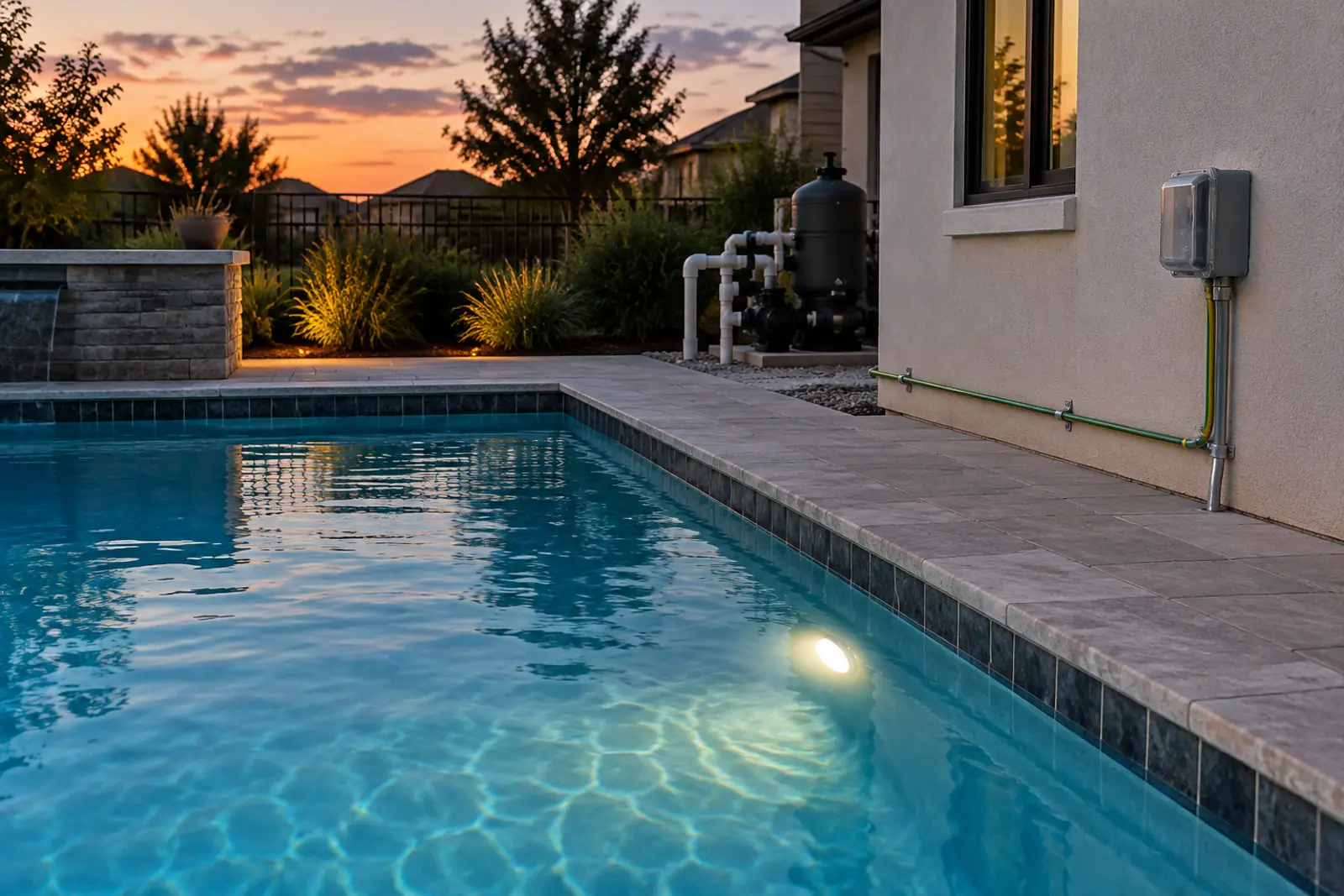
Pool electrocution statistics are small and incomplete. CPSC knows of 33 electrocution deaths and 33 shock injuries in U.S. pools and spas from 2002 to 2018, about 1.9 deaths a year. NEISS data put pool and spa electrical injury ER visits at an estimated 1,245 for 2015 to 2025. Death counts are minimums because some electrocutions are recorded as drownings.
At a glance
- CPSC knows of 33 electrocution deaths and 33 electrical shock injuries in U.S. swimming pools and spas from 2002 to 2018, across 47 incidents (CPSC).
- U.S. death certificates reviewed by CPSC show 19 electrocutions in the Pool/Whirlpool/Hot Tub category from 2011 to 2020, 4.6% of 410 consumer product electrocutions (CPSC 2011-2020 electrocution report).
- An estimated 1,245 people (95% CI 697 to 1,793) visited U.S. emergency departments for electrical injuries in and around pools and spas from 2015 to 2025, about 113 a year (CPSC NEISS microdata, PC&S analysis).
- No single year of NEISS pool electrical data from 2015 to 2025 meets CPSC’s publication rule, and the 2023 and 2025 U.S. samples contain no such cases (CPSC NEISS microdata, PC&S analysis).
- Cords, plugs or outlets were the electrical source in 10 of 35 U.S. NEISS pool and spa electrical cases from 2015 to 2025 (28.6%); pool lights appeared in 2 (CPSC NEISS microdata, PC&S analysis).
- For U.S. deaths in 2018 to 2020, death certificates recorded 279 pool drownings for every pool or spa electrocution record CPSC identified (CDC WONDER; CPSC 2011-2020 electrocution report).
- The National Electrical Code first required GFCI protection for underwater pool lights in 1968; as of October 2026, NFPA lists 6 U.S. states enforcing the 2026 edition (IAEI Magazine; NFPA).
Pool electrocution statistics: deaths recorded by CPSC, 2002 to 2020
Two CPSC data systems put recorded U.S. pool and spa electrocution deaths at roughly 1.7 to 1.9 a year since 2002. Both count only cases CPSC learned about or could link to a pool, spa or hot tub, so they are floors, not totals.
CPSC’s incident table lists 47 shock-related U.S. pool and spa incidents from 2002 to 2018 that injured 33 people and killed 33 (CPSC). CPSC counted 23 of those deaths in 2002 to 2014 (CPSC). The table’s total row is labelled 2010 to 2018, but its values equal the sum of every year from 2002 to 2018 (PC&S check of the CPSC table).
| year | incidents | injuries | deaths |
|---|---|---|---|
| 2002 | 4 | 2 | 2 |
| 2003 | 3 | 1 | 2 |
| 2004 | 2 | 0 | 2 |
| 2005 | 3 | 0 | 3 |
| 2006 | 2 | 1 | 1 |
| 2007 | 4 | 4 | 2 |
| 2008 | 1 | 0 | 1 |
| 2009 | 2 | 1 | 1 |
| 2010 | 3 | 1 | 2 |
| 2011 | 2 | 1 | 1 |
| 2012 | 2 | 1 | 2 |
| 2013 | 3 | 5 | 2 |
| 2014 | 4 | 4 | 2 |
| 2015 | 3 | 2 | 1 |
| 2016 | 5 | 9 | 2 |
| 2017 | 4 | 1 | 7 |
| 2018 | 0 | 0 | 0 |
Source: CPSC, Don't Swim with Shocks (CPSRMS data, Office of Epidemiology). Download CSV
Counts are minimums. Late reports are common: two 2013 to 2014 fatal incidents reached CPSC in 2015.
Source: CPSC, Don't Swim with Shocks (CPSRMS data compiled by the Office of Epidemiology). Download chart data (CSV)
A second CPSC series reviews death certificates coded ICD-10 W85 to W87 (accident caused by electric current) (CPSC 2011-2020 electrocution report). CPSC staff counted 19 electrocutions in the Pool/Whirlpool/Hot Tub category from 2011 to 2020, out of 410 in-scope U.S. consumer product electrocutions (CPSC 2011-2020 electrocution report). The earlier report counted 17 of 445 for 2004 to 2013 (CPSC 2004-2013 electrocution report). CPSC presents these product counts as observed records, not national estimates (CPSC 2011-2020 electrocution report).
| year | pool_whirlpool_hot_tub_records | all_consumer_product_records | source_report |
|---|---|---|---|
| 2004 | 3 | 44 | CPSC 2004-2013 report (May 2017) |
| 2005 | 3 | 69 | CPSC 2004-2013 report (May 2017) |
| 2006 | 1 | 37 | CPSC 2004-2013 report (May 2017) |
| 2007 | 1 | 31 | CPSC 2004-2013 report (May 2017) |
| 2008 | 2 | 30 | CPSC 2004-2013 report (May 2017) |
| 2009 | 2 | 57 | CPSC 2004-2013 report (May 2017) |
| 2010 | 1 | 63 | CPSC 2004-2013 report (May 2017) |
| 2011 | 0 | 29 | CPSC 2011-2020 report (November 2023) |
| 2012 | 2 | 36 | CPSC 2011-2020 report (November 2023) |
| 2013 | 2 | 41 | CPSC 2011-2020 report (November 2023) |
| 2014 | 1 | 33 | CPSC 2011-2020 report (November 2023) |
| 2015 | 1 | 35 | CPSC 2011-2020 report (November 2023) |
| 2016 | 4 | 31 | CPSC 2011-2020 report (November 2023) |
| 2017 | 1 | 39 | CPSC 2011-2020 report (November 2023) |
| 2018 | 3 | 56 | CPSC 2011-2020 report (November 2023) |
| 2019 | 3 | 60 | CPSC 2011-2020 report (November 2023) |
| 2020 | 2 | 50 | CPSC 2011-2020 report (November 2023) |
Source: CPSC 2004-2013 report, Table 5 (2004 to 2010); CPSC 2011-2020 report, Table 5 (2011 to 2020). Download CSV
2004 to 2010 from the 2017 report; 2011 to 2020 from the 2023 report, which re-reviewed scope. Deaths coded as drowning are not included.
Source: CPSC, Electrocutions Associated With Consumer Products: 2004-2013 and 2011-2020. Download chart data (CSV)
The last bar is a PC&S illustration, not a CPSC estimate.
Source: PC&S calculation from CPSC releases, safety guide and electrocution reports. Download chart data (CSV)
Electric shock injuries at pools treated in emergency departments, 2015 to 2025
NEISS records only a handful of pool and spa electrical injuries each year: 35 sample cases across 11 years. Combined, they support one national estimate of 1,245 U.S. emergency department visits for 2015 to 2025; no single year is reliable on its own.
PC&S searched all 11 NEISS annual files (2015 to 2025) for diagnosis 67 (electric shock, which NEISS also uses for electrocution deaths) or 46 (electrical burn) and kept cases with a pool, pool equipment or hot tub product code or a pool or spa word in the narrative (NEISS Coding Manual 2025; CPSC NEISS microdata, PC&S analysis). Each narrative was read; lightning, a foot spa, an implanted defibrillator firing and a bounce-house water pool were excluded, leaving 35 cases (CPSC NEISS microdata, PC&S analysis).
| year | sample_cases | national_estimate | meets_cpsc_publication_rule | all_products_electrical_ed_visits_estimate | all_products_cv_pct |
|---|---|---|---|---|---|
| 2015 | 2 | Suppressed | No | 11190 | 13.2 |
| 2016 | 6 | Suppressed | No | 10590 | 12.5 |
| 2017 | 3 | Suppressed | No | 10150 | 10.4 |
| 2018 | 4 | Suppressed | No | 11080 | 11.3 |
| 2019 | 5 | Suppressed | No | 8500 | 10.3 |
| 2020 | 5 | Suppressed | No | 9140 | 13.1 |
| 2021 | 2 | Suppressed | No | 9170 | 11.1 |
| 2022 | 3 | Suppressed | No | 10990 | 10.9 |
| 2023 | 0 | Suppressed | No | 10250 | 9.5 |
| 2024 | 5 | Suppressed | No | 13290 | 9.7 |
| 2025 | 0 | Suppressed | No | 15670 | 10.7 |
Source: CPSC NEISS microdata, PC&S analysis; all-product column = every diagnosis 46 or 67 case. Download CSV
Pooled over 2015 to 2025, the estimate is 1,245 U.S. emergency department visits (95% CI 697 to 1,793), about 113 a year (CPSC NEISS microdata, PC&S analysis). The pooled estimate passes CPSC’s rule (estimate of at least 1,200, at least 20 cases, CV of 33% or less) with a CV of 22.5%, but only narrowly (CPSC NEISS estimates guide; CPSC NEISS microdata, PC&S analysis). Pool and spa cases were 1.0% of all U.S. electrical injury emergency department visits over the same years (CPSC NEISS microdata, PC&S analysis).
A 2019 study using NEISS for 1991 to 2013 counted 566 U.S. emergency department cases of pool-associated electrical injury, with 91.8% treated and released and 8.2% hospitalized (Tashiro and Burnweit, Pediatric Emergency Care). The abstract does not show the case definition, so its count is not comparable with the 35 cases found here (Tashiro and Burnweit, Pediatric Emergency Care).
What equipment is involved in pool and hot tub electrical injuries
CPSC lists the electrical sources found around pools but publishes no shares by source. NEISS narratives point more often to cords, plugs, outlets and nearby wiring than to the pool’s own lighting, though the counts are small.
Unweighted sample counts. Too few cases for stable weighted shares.
Source: PC&S analysis of CPSC NEISS microdata, 2015 to 2025. Download chart data (CSV)
| equipment_category | sample_cases | share_of_cases_pct | in_water | hot_tub_or_spa | admitted |
|---|---|---|---|---|---|
| Cord, plug or outlet | 10 | 28.6 | 1 | 0 | 1 |
| Pump, filter or motor | 5 | 14.3 | 3 | 0 | 2 |
| Source not identified | 5 | 14.3 | 4 | 0 | 1 |
| Wiring, panel or fuse box | 5 | 14.3 | 1 | 1 | 1 |
| Decorative lights, switches or other nearby devices | 4 | 11.4 | 1 | 1 | 2 |
| Hot tub or spa equipment | 4 | 11.4 | 2 | 4 | 1 |
| Pool or underwater light | 2 | 5.7 | 2 | 0 | 0 |
Source: CPSC NEISS microdata, PC&S analysis. Categories coded by PC&S from case narratives. Download CSV
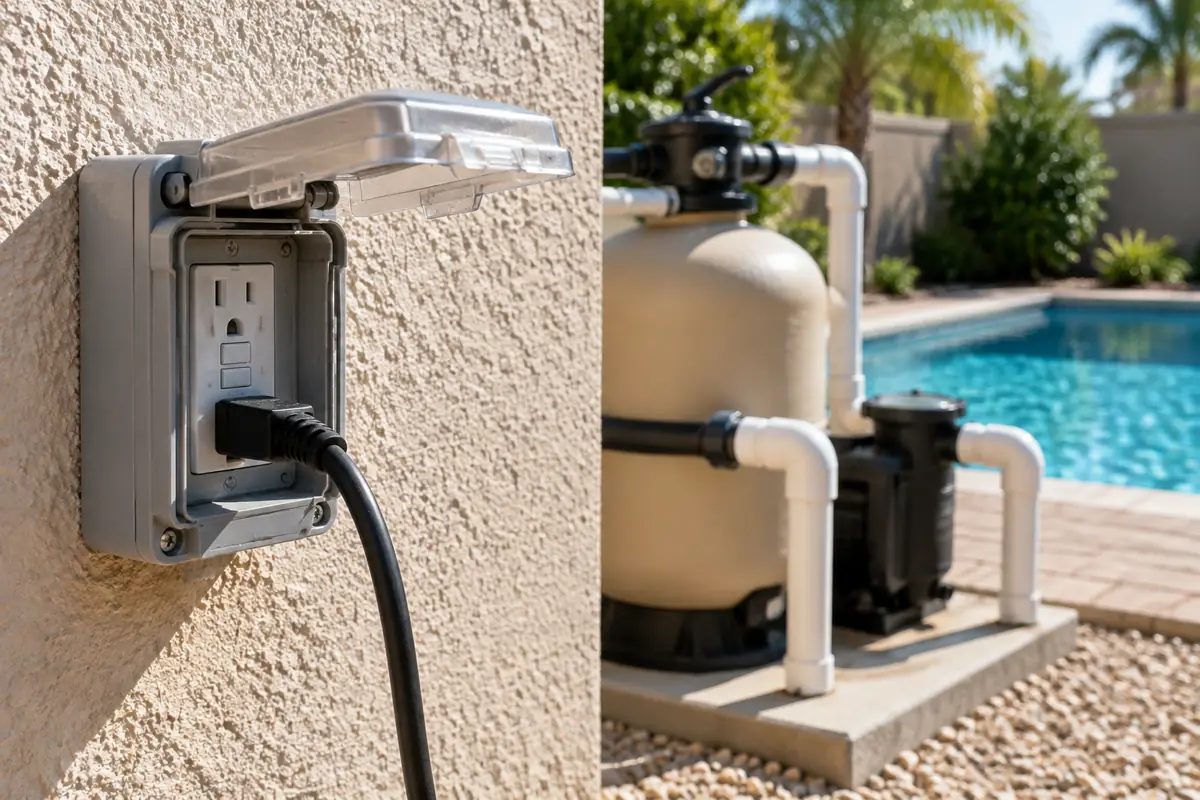
Cords, plugs or outlets accounted for 10 of 35 U.S. NEISS cases from 2015 to 2025 (28.6%), often a child handling a plug or cord for a pump, filter, air pump or nearby appliance (CPSC NEISS microdata, PC&S analysis). Pumps, filters or motors, fixed wiring, and unidentified sources each accounted for 5 cases (14.3%) (CPSC NEISS microdata, PC&S analysis). Pool or underwater lights appeared in 2 cases (5.7%), and hot tub controls or jets in 4 (11.4%) (CPSC NEISS microdata, PC&S analysis).
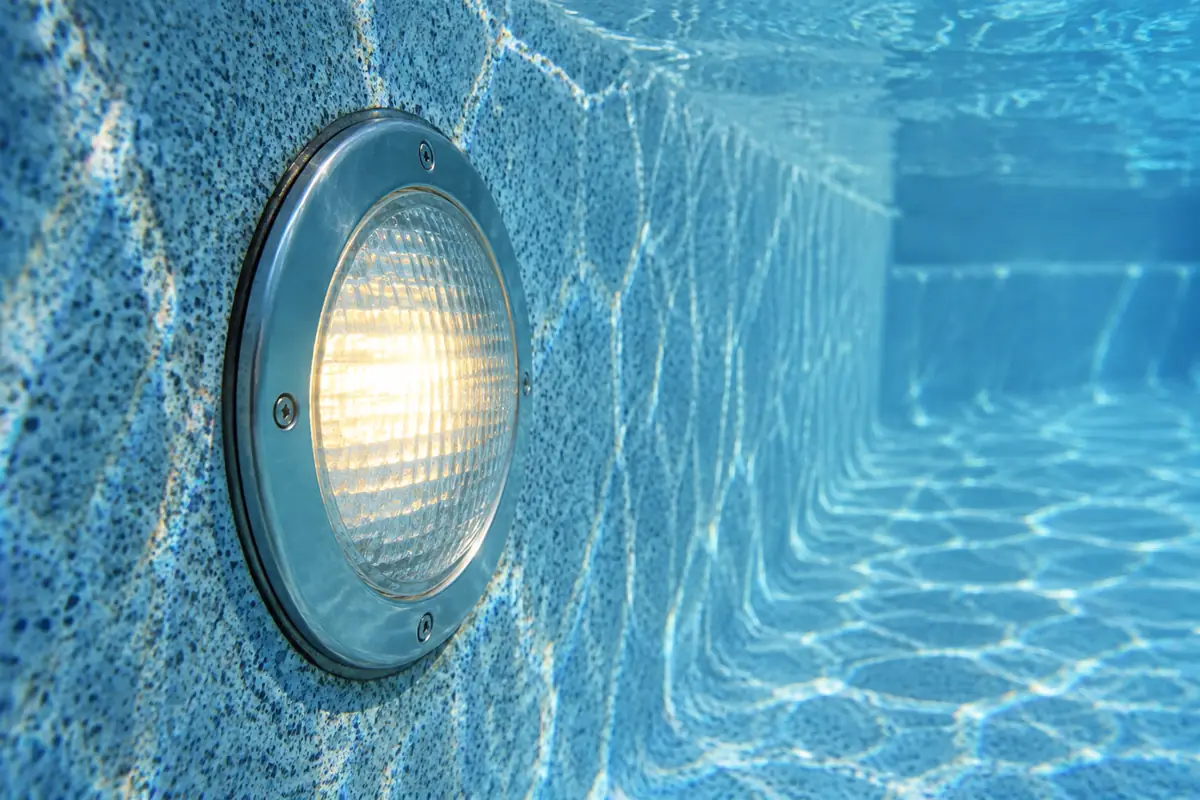
- CPSC’s list of electricity sources around pools: underwater lights; pumps, filters and vacuums; extension and power cords; outlets and switches; radios, stereos and TVs; overhead power lines (CPSC).
- CPSC’s 2003 warning named faulty underwater lighting, aging wiring, ungrounded pumps, power washers and vacuums, and appliances or cords pulled into the water (CPSC 2003 release).
- The 1991 to 2013 NEISS study found electrical outlets or receptacles implicated in 39.8% of U.S. pool electrical injury cases (Tashiro and Burnweit, Pediatric Emergency Care).
Who is hurt: age, setting and season of pool electrical injuries
Children, homes and summer months dominate the small NEISS sample. These are unweighted shares of 35 cases and describe the sample, not a precise national profile.
- Children under 15: 19 of 35 U.S. cases, 2015 to 2025 (54.3%) (CPSC NEISS microdata, PC&S analysis).
- Injury at home: 22 of 35 (62.9%) (CPSC NEISS microdata, PC&S analysis).
- Treated in June, July or August: 25 of 35 (71.4%) (CPSC NEISS microdata, PC&S analysis).
- Hot tub or spa involved: 6 of 35 (17.1%) (CPSC NEISS microdata, PC&S analysis).
- Admitted or transferred: 8 of 35 (22.9%); none died in the emergency department (CPSC NEISS microdata, PC&S analysis).
- In the 1991 to 2013 NEISS study, 48.4% of U.S. pool electrical injuries involved patients under 18 and 57.0% occurred at home where location was stated (Tashiro and Burnweit, Pediatric Emergency Care).
Pool electrocutions in the context of all U.S. electrocution deaths
Pool and spa cases are a small slice of U.S. electrocution deaths and a much smaller slice of pool deaths, most of which are drownings. CDC mortality data cannot isolate pool electrocutions directly.
| year | w85_transmission_lines | w86_other_specified_current | w87_unspecified_current | total_w85_w87 | status |
|---|---|---|---|---|---|
| 2018 | 89 | 48 | 183 | 320 | final |
| 2019 | 91 | 58 | 147 | 296 | final |
| 2020 | 80 | 49 | 148 | 277 | final |
| 2021 | 105 | 71 | 143 | 319 | final |
| 2022 | 81 | 44 | 147 | 272 | final |
| 2023 | 92 | 39 | 153 | 284 | final |
| 2024 | 96 | 46 | 122 | 264 | final |
| 2025 | 284 | provisional |
Source: CDC WONDER, Underlying Cause of Death 2018-2024; CDC WONDER provisional 2025. Download CSV
All electrocutions, including work and power-line deaths. WONDER has no place-of-injury field, so pool deaths cannot be separated.
Source: CDC WONDER, Underlying Cause of Death 2018-2024 and Provisional Mortality 2025. Download chart data (CSV)
U.S. death certificates recorded 2,032 accidental electrocution deaths (W85 to W87) from 2018 to 2024, about 290 a year (CDC WONDER). Males accounted for 94.1% of those deaths (CDC WONDER). CDC WONDER offers place of death (hospital, home) but no place-of-injury field, so pool deaths cannot be separated from the total (CDC WONDER).
CPSC’s Pool/Whirlpool/Hot Tub records equal 0.7% of the 2,749 U.S. death records coded as electrocution in 2011 to 2020 (CPSC 2011-2020 electrocution report). For 2018 to 2020, U.S. death certificates show 2,233 swimming pool drownings (W67-W68) against 8 pool or spa electrocution records, 279 to 1 (CDC WONDER; CPSC 2011-2020 electrocution report). Drowning detail is in the pool drowning statistics by state report.
GFCI and NEC Article 680 rules for pools, spas and hot tubs, 1968 to 2026
Pools were the first place the National Electrical Code required GFCI protection, and Article 680 added pool rules in each of the 2020, 2023 and 2026 editions. The code generally applies to new work, so older pools can carry older protections.
- NEC edition2026 NEC takes effect for adoptionNFPA issued the 2026 NEC on August 20, 2025, with an effective date of September 9, 2025. Six states list it as in effect (NFPA, accessed 2026-10-07).
- Article 6802026 NEC Article 680 changesPortable electric signs barred within 5 feet of a pool (680.22(D)); GFCI on reconditioned pool pump motors (680.21(D)); three-phase GFCI or SPGFCI coverage raised to 100 amperes; perimeter bonding surface defined as 3 feet out and 3 feet above and below maximum water level.
- Article 680TIA 70-26-1 on GFCIs and variable speed pool motorsAmends 680.21(C) in the 2023 and 2026 editions: GFCI protection is not to be installed between a variable speed drive's output and the pool motor.
- GFCI2023 NEC: special purpose GFCIsCircuits over 150 volts to ground at pools that need ground-fault protection must use special purpose GFCIs (Classes C, D, E), which trip at 20 mA.
- GFCI2020 NEC: GFCI on replaced pool pump motorsGFCI required when a pool pump motor on a single-phase 120 to 240 volt circuit is replaced, and for pool motors rated 250 volts or less and 60 amperes or less; reconstructed conductive shells must be bonded to current rules.
- GFCI1981 NEC: spas and hot tubs addedSpas and hot tubs added to the list of items requiring GFCI protection.
- GFCI1971 NEC: receptacles near poolsGFCI protection required for receptacles within 20 feet of swimming pools.
- GFCI1968 NEC: first GFCI rule, underwater pool lightsThe first NEC GFCI requirement applied to underwater lighting fixtures in swimming pools (680-4(g)); the same edition introduced the GFCI definition.
The 1968 NEC introduced the first GFCI requirement, for underwater lighting fixtures in swimming pools; the 1971 edition extended it to receptacles within 20 feet of pools, and the 1981 edition added spas and hot tubs (IAEI Magazine). A Class A GFCI trips at 6 milliamperes of current to ground and does not trip below 4 milliamperes (IAEI Magazine). CPSC’s fact sheet describes GFCIs reacting to a difference as small as 0.006 amperes (CPSC GFCI fact sheet).
CPSC notes that the NEC typically applies to new construction or major renovations (CPSC GFCI fact sheet), and older editions do not require existing pools to be upgraded (Hamilton & Associates, Pool & Spa Show 2026). Where the 2020 or a later NEC is adopted, a replaced pool pump motor must be GFCI protected (Hamilton & Associates, Pool & Spa Show 2026). Work on pool electrical systems usually requires a licensed electrician; see pool contractor license requirements.
Which National Electrical Code edition each state enforces
States adopt the NEC on their own schedules, so pool wiring rules differ by state. NFPA lists 6 states on the 2026 edition and 6 still on 2017 or 2008.
Blank tiles: local adoption only. DC is not listed. Some states list different editions for commercial and residential work.
Source: NFPA, NEC enforcement maps (state table, accessed 2026-10-07). Download chart data (CSV)
| state | state_name | nec_edition_in_effect | nfpa_listing | update_status |
|---|---|---|---|---|
| AL | Alabama | 2020 | 2020 (7/1/2022), Alabama Division of Construction Management | |
| AK | Alaska | 2020 | 2020 (4/16/2020) | |
| AZ | Arizona | Local | Local adoption only | |
| AR | Arkansas | 2020 | 2020 with AR amendments (8/1/2022) | 2026 update process underway (Effective date not established) |
| CA | California | 2023 | 2023 with CA amendments (1/1/2026) | |
| CO | Colorado | 2026 | 2026 (8/1/2026) | |
| CT | Connecticut | 2020 | 2020 with CT amendments (10/1/2022) | 2023 update process underway (Effective date not established) |
| DE | Delaware | 2023 | 2023 (1/1/2026) | |
| FL | Florida | 2020 | 2020 (12/31/2023) | 2023 update process underway (Effective date not established) |
| GA | Georgia | 2023 | 2023 (1/1/2025) | |
| HI | Hawaii | 2020 | 2020 (3/14/2023) | |
| ID | Idaho | 2023 | 2023 (7/1/2023) with ID amendments (temporary rules permit use of 2017 NEC w/ID amendments) | |
| IL | Illinois | 2008 | 2008 (7/1/11 - commercial occupancies for areas outside of local jurisdictions that have adoption authority) | |
| IN | Indiana | 2008 | 2008 Commercial with IN amendments (8/26/2009); 2017 (2018 IRC) One- and two-family dwellings with IN amendments (12/26/2019) | 2023 Update process underway (Effective date not established) |
| IA | Iowa | 2023 | 2023 with IA amendments (7/1/2025) | 2026 update process underway (Effective date not established) |
| KS | Kansas | 2008 | 2008 (2/4/11 - State Fire Marshal) | |
| KY | Kentucky | 2023 | 2023 (1/1/2025) | 2026 update process underway (Effective date not established) |
| LA | Louisiana | 2020 | 2020 (1/1/2023) | |
| ME | Maine | 2026 | 2026 with ME amendments (7/1/2026) | |
| MD | Maryland | 2020 | 2020 (7/1/2025) with MD amendments | 2023 update process underway (Effective date not established) |
| MA | Massachusetts | 2026 | 2026 with MA amendments (4/24/2026) | |
| MI | Michigan | 2023 | 2023; Commercial (3/12/2024); 2014; One- and two-family dwellings (2/8/2016) | 2026 update process underway (Commercial effective date not established) |
| MN | Minnesota | 2026 | 2026 (8/17/2026) | |
| MS | Mississippi | Local | Local incorporation by reference only | |
| MO | Missouri | Local | Local incorporation by reference only | |
| MT | Montana | 2020 | 2020 with MT amendments (6/10/2022) | 2023 update process underway (Projected 9/2026) |
| NE | Nebraska | 2023 | 2023 (8/1/2024) | 2026 update process underway (Effective date not established) |
| NV | Nevada | 2017 | 2017 (7/1/18 - Nevada State Public Works Division) | |
| NH | New Hampshire | 2023 | 2023 with NH amendments (7/1/2025 with 6-month grace period permitting use of prior edition that was in effect) | |
| NJ | New Jersey | 2020 | 2020 with NJ amendments (9/6/2022) | |
| NM | New Mexico | 2020 | 2020 (3/28/2023) | |
| NY | New York | 2023 | 2023 (12/31/2025) | |
| NC | North Carolina | 2020 | 2020 with NC amendments for other than one- and two-family dwellings (11/1/21) | |
| ND | North Dakota | 2026 | 2026 (7/1/2026) | |
| OH | Ohio | 2023 | 2023; Commercial (3/1/2024); Residential with OH amendments (4/15/2024) | |
| OK | Oklahoma | 2023 | 2023 (9/14/2024) | |
| OR | Oregon | 2023 | 2023 with OR amendments (10/1/2023) | 2026 update process underway (Projected 10/1/2026) |
| PA | Pennsylvania | 2020 | 2020 (1/1/2026) | |
| RI | Rhode Island | 2023 | 2023 (12/1/2025) | |
| SC | South Carolina | 2020 | 2020 with SC amendments (1/1/2023) | 2023 update process complete (Effective 1/1/2027) |
| SD | South Dakota | 2023 | 2023 (11/12/2024) with SD amendments | |
| TN | Tennessee | 2017 | 2017 (10/1/2018) with TN amendments | |
| TX | Texas | 2023 | 2023 (9/1/2023) | |
| UT | Utah | 2023 | 2023 (1/1/2025) | |
| VT | Vermont | 2020 | 2020 (1/1/2023) | 2023 update process underway |
| VA | Virginia | 2020 | 2020 (1/18/2024) | 2023 update process underway (Effective date not established) |
| WA | Washington | 2023 | 2023 (4/1/2024) | 2026 update process underway (Projected 12/31/2026) |
| WV | West Virginia | 2020 | 2020 with WV amendments (8/1/2022) | |
| WI | Wisconsin | 2017 | 2017; Commercial (8/1/2018); Residential (1/1/2020) | 2023 update process complete (Effective 9/1/2026) |
| WY | Wyoming | 2026 | 2026 (7/1/2026) |
Source: NFPA, NEC enforcement maps (state table). Download CSV
NFPA’s state table lists the 2026 NEC in Colorado, Maine, Massachusetts, Minnesota, North Dakota and Wyoming (NFPA). It lists 3 states on the 2017 edition and 3 on 2008, editions that predate the 2020 pump motor GFCI rule: IL, IN, KS, NV, TN, WI (NFPA; Hamilton & Associates, Pool & Spa Show 2026). Arizona, Mississippi and Missouri have local adoption only (NFPA).
Contrast: electric shock drowning at freshwater marinas and docks
Electric shock drowning (ESD) is a related hazard in open freshwater near docks and boats, not in pools. It is shown here only for contrast, because pool and spa rules and marina rules sit in different NEC articles.
NFPA describes ESD as low-level current leaking from marina, dock or boat wiring into the water, paralyzing a swimmer who then drowns (NFPA). NFPA states that the majority of ESD incidents have happened at residential waterfront locations with private docks (NFPA). NASBLA says relatively few ESDs are documented each year and an unknown number may be misdiagnosed as drowning (NASBLA).
- Marina rules sit in NEC Article 555, where ground-fault protection of equipment may not exceed 100 mA on feeders and branch circuits and 30 mA for shore power receptacles (NFPA).
- The 2026 NEC made Article 555 equipotential plane rules resemble the pool rules in 680.26 (NFPA 2026 NEC summary).
- A marina safety researchers’ compilation states currents as low as 10 mA can paralyze a swimmer’s limbs in freshwater (ESD Prevention Association list).
How these figures compare with widely cited pool electrocution numbers
The most repeated pool electrocution numbers online are older CPSC figures, sometimes with shifted dates. This report uses the latest CPSC releases and states each period.
- ’60 deaths and nearly 50 serious shocks since 1990′ comes from a May 2003 CPSC release covering the previous 13 years, not from current data (CPSC 2003 release; ESFI).
- ’33 deaths and 33 injuries’ is CPSC’s 17-year table for 2002 to 2018; it is not a four-year figure (CPSC).
- CPSC’s broader estimate of about 200 consumer product electrocution deaths a year dates from 2002; the 2023 report puts the 2018 to 2020 average at about 100 (CPSC 2002 release; CPSC 2011-2020 electrocution report).
- The 566 NEISS cases in the 1991 to 2013 study and the 35 cases here use different definitions and periods (Tashiro and Burnweit, Pediatric Emergency Care; CPSC NEISS microdata, PC&S analysis).
- Recalls of electrical pool products are tracked separately in pool product recalls.
Fifteen numbers that matter
- CPSC knows of 33 electrocution deaths in U.S. pools and spas from 2002 to 2018, 1.9 a year on average (CPSC).
- CPSC knows of 33 injuries from 47 shock-related U.S. pool and spa incidents from 2002 to 2018 (CPSC).
- The deadliest year in the CPSC U.S. pool and spa shock table is 2017, with 7 deaths from 4 incidents (CPSC).
- CPSC identified no U.S. pool or spa electrocution injuries or deaths for 2018, and it received 2 fatal incidents from 2013 to 2014 only in 2015 (CPSC).
- U.S. shock-related pool and spa incidents known to CPSC from 2002 to 2018 averaged 1.4 victims each (CPSC, PC&S calculation).
- CPSC death certificate reviews count 17 U.S. Pool/Whirlpool/Hot Tub electrocutions in 2004 to 2013 and 19 in 2011 to 2020 (CPSC 2004-2013 electrocution report; CPSC 2011-2020 electrocution report).
- Pool, whirlpool and hot tub electrocutions were 4.6% of CPSC’s 410 in-scope U.S. consumer product electrocution records in 2011 to 2020 (CPSC 2011-2020 electrocution report).
- CPSC estimated about 100 U.S. consumer product electrocution deaths a year in 2018 to 2020 (CPSC 2011-2020 electrocution report).
- In May 2003, CPSC reported 60 deaths and nearly 50 serious shocks from electrical hazards around U.S. pools over the previous 13 years, 4.6 deaths a year (CPSC 2003 release).
- An estimated 1,245 U.S. emergency department visits for pool and spa electrical injuries occurred from 2015 to 2025 combined, with a coefficient of variation of 22.5% (CPSC NEISS microdata, PC&S analysis).
- Pool and spa cases were 1.0% of an estimated 120,030 U.S. electrical injury emergency department visits from 2015 to 2025 (CPSC NEISS microdata, PC&S analysis).
- 54.3% of 35 U.S. NEISS pool and spa electrical cases from 2015 to 2025 were children under 15, and 71.4% were treated in June, July or August (CPSC NEISS microdata, PC&S analysis).
- U.S. death certificates recorded 264 accidental electrocution deaths (ICD-10 W85-W87) in 2024 and 284 in 2025 (provisional), with no place-of-injury field to isolate pools (CDC WONDER; CDC WONDER provisional data).
- Of 50 U.S. states, NFPA lists 6 with the 2026 NEC, 18 with 2023, 17 with 2020, 3 with 2017, 3 with 2008 and 3 with local adoption only, as read on October 7, 2026 (NFPA).
Rates, trends and severity we calculated
Pool and spa electrocution deaths per year, best official series
How many people die from electrocution in U.S. pools and spas each year?
Deaths in each CPSC series / years covered; illustrative scaling = 2018-2020 pool records x (CPSC national estimates / in-scope records) / 3Inputs: fact rows #1, #16, #45, #12, #38 to #40; derived D1, D2, D3, D4, D8, D11
Limitations: Observed counts are minimums; electrocutions coded as drowning are excluded; the scaling is a PC&S illustration that CPSC does not publish; the 2003 figure uses an older system.
NEISS electrical ED visits involving pool and spa products, with stability flags
How many people are treated in U.S. emergency departments for electric shocks at pools and spas?
Sum of NEISS weights for coded cases; stratified PSU linearization for CV; CPSC rule applied per year and pooledInputs: fact rows #109, #104, #105, #106; derived D17 to D24
Limitations: 35 sample cases; PC&S narrative coding; variance approximates CPSC’s method; the pooled estimate barely clears the 1,200 threshold.
Equipment involved in pool and spa electrical injuries
What equipment is involved?
Coded NEISS cases per equipment category / 35Inputs: derived D24 to D31; fact rows #10, #15, #100
Limitations: Unweighted shares of 35 non-fatal cases; fatal in-water incidents (often lighting) are under-represented in NEISS.
GFCI and NEC Article 680 adoption gap
Which pool electrical protections apply where?
Count of states by NEC edition in NFPA's state table; editions compared with the year each Article 680 rule entered the codeInputs: fact rows #65, #66, #67, #72, #85; derived D38 to D44
Limitations: Edition in effect does not show local amendments, local adoption or enforcement; existing pools are generally not required to upgrade.
Multi-victim incidents
How many people does a pool shock incident affect?
(injuries + deaths) / incidents, CPSC 2002 to 2018Inputs: fact rows #2, #1, #3; derived D12, D13
Limitations: Reported incidents favour severe and fatal events, so the death share overstates lethality.
Scale against pool drowning
How large is the electrocution problem relative to pool drowning?
W67-W68 deaths 2018-2020 / CPSC pool and spa electrocution records 2018-2020Inputs: fact rows #124 to #126, #25 to #27; derived D9, D14, D15, D16
Limitations: Mixes a complete vital statistics count with CPSC observed in-scope records.
New in this edition
- PC&S added the NEISS 2025 file, downloaded from CPSC on 2026-10-07: the 2025 U.S. sample has no pool or spa electrical cases, while all-product electrical injury ED visits are estimated at 15,670 (CPSC NEISS microdata, PC&S analysis).
- CDC WONDER provisional data (queried 2026-10-07) show 284 U.S. accidental electrocution deaths (W85-W87) in 2025, up from 264 in final 2024 data (CDC WONDER provisional data).
- NFPA reports that as of August 3, 2026 the 2026 NEC is in effect in 6 U.S. states (NFPA).
- The 2026 NEC took effect for adoption on September 9, 2025; its Article 680 changes include a 5-foot exclusion for portable electric signs at pools and GFCI protection for reconditioned pool pump motors (NFPA; Hamilton & Associates, Pool & Spa Show 2026).
- TIA 70-26-1, effective April 30, 2025, says GFCI protection is not to be installed between a variable speed drive and a pool motor (Hamilton & Associates, Pool & Spa Show 2026).
- CPSC’s latest electrocution report (November 2023, covering 2011 to 2020) counts 19 U.S. pool, whirlpool and hot tub electrocution records (CPSC 2011-2020 electrocution report).
What people ask
How common are pool electrocutions?
Rare. CPSC knows of 33 electrocution deaths in U.S. pools and spas from 2002 to 2018, about 1.9 a year, and death certificates show 19 in 2011 to 2020 (CPSC; CPSC 2011-2020 electrocution report).
Can you get electrocuted in a pool?
Yes. CPSC lists 33 deaths and 33 injuries in U.S. pool and spa shock incidents from 2002 to 2018, and 14 of 35 NEISS pool electrical cases in 2015 to 2025 happened while the person was in the water (CPSC; CPSC NEISS microdata, PC&S analysis).
What causes pool electrocution?
CPSC lists underwater lights, pumps and filters, cords, outlets and switches, nearby appliances and overhead lines (CPSC). In U.S. NEISS cases from 2015 to 2025, cords, plugs or outlets were the source in 28.6% (CPSC NEISS microdata, PC&S analysis).
Do pool lights need a GFCI?
Under the NEC, line-voltage underwater pool lights have required GFCI protection since the 1968 edition (IAEI Magazine; CPSC GFCI fact sheet). In 2003 CPSC cited the NEC rule for 120-volt underwater lighting circuits and recommended GFCIs for circuits of 15 volts or more (CPSC 2003 release). Under the 2023 NEC, lights at or below the 15-volt Low Voltage Contact Limit fed by listed transformers do not need ground-fault protection (Hamilton & Associates, Pool & Spa Show 2026).
How do you know if a pool is electrified?
CPSC lists tingling, muscle cramps, inability to move, panicked or motionless swimmers and underwater lights that flicker or stay on when they should be off (CPSC). Freshwater research notes that a current as low as 10 mA can paralyze limbs (ESD Prevention Association list).
Common questions
How many people die from pool electrocution each year in the US?
CPSC records point to about 1.9 a year: 33 deaths in 2002 to 2018 and 19 death certificate records in 2011 to 2020 (CPSC; CPSC 2011-2020 electrocution report). The true number is higher because some are recorded as drownings.
Are pool electrocutions becoming less common?
CPSC’s 2003 release implies 4.6 deaths a year in the 13 years to 2003, compared with 1.9 a year in 2002 to 2018 (CPSC 2003 release; CPSC). The series use different systems, so the decline is indicative only.
How many people go to the ER for electric shocks at pools?
An estimated 1,245 U.S. emergency department visits in 2015 to 2025 combined, about 113 a year (95% CI 697 to 1,793) (CPSC NEISS microdata, PC&S analysis).
Are hot tubs part of these numbers?
Yes. CPSC’s death certificate category combines pools, whirlpools and hot tubs (CPSC 2011-2020 electrocution report), and 6 of 35 U.S. NEISS cases in 2015 to 2025 involved a hot tub or spa (CPSC NEISS microdata, PC&S analysis).
What share of US electrocutions happen in pools?
Pools, whirlpools and hot tubs were 4.6% of consumer product electrocution records in 2011 to 2020 and 0.7% of all electrocution death records (CPSC 2011-2020 electrocution report).
When did GFCI protection become required for pools?
The 1968 NEC required GFCI protection for underwater pool lights, the 1971 NEC for receptacles within 20 feet of pools, and the 1981 NEC for spas and hot tubs (IAEI Magazine).
Which states use the 2026 National Electrical Code?
As read on October 7, 2026, NFPA lists Colorado, Maine, Massachusetts, Minnesota, North Dakota and Wyoming (6 states) (NFPA).
Is electric shock drowning the same as pool electrocution?
No. ESD mostly occurs in freshwater near docks and marinas, and NFPA says the annual number is not known (NFPA). Pool cases fall under NEC Article 680; marinas under Article 555 (NFPA 2026 NEC summary).
Why are pool electrocution figures uncertain?
CPSC searches only electrocution codes W85 to W87, incident reports arrive late (2 fatal 2013 to 2014 incidents reached CPSC in 2015), and NEISS has too few cases for yearly estimates (CPSC 2011-2020 electrocution report; CPSC; CPSC NEISS estimates guide).
Who is most often hurt in pool electrical injuries?
Children: 54.3% of 35 U.S. NEISS cases in 2015 to 2025 were under 15 (CPSC NEISS microdata, PC&S analysis), and 48.4% of cases in a 1991 to 2013 NEISS study were under 18 (Tashiro and Burnweit, Pediatric Emergency Care).
Method and data notes
- Opened the latest CPSC pool electrical safety guide, the 2003 CPSC release and both CPSC electrocution reports (2004 to 2013, published 2017; 2011 to 2020, published November 2023, the latest listed on CPSC’s electrocution page).
- Downloaded the NEISS 2025 annual file from CPSC on 2026-10-07 and reused the 2015 to 2024 files obtained for the pool injury report; extracted every case with diagnosis 46 or 67, plus pool or spa keyword cases with electrical wording (scripts/01_extract_electrical.py).
- Read every candidate narrative and coded inclusion, water body, electrical source and whether the person was in the water (raw/neiss_pool_electrical_case_coding.csv).
- Computed weighted estimates, stratified PSU variance and the CPSC stability flag by year and pooled (scripts/04_analyze_neiss.py).
- Queried CDC WONDER for ICD-10 W85 to W87 deaths (final 2018 to 2024, provisional 2025) (scripts/02_run_wonder.py).
- Built the GFCI and Article 680 timeline from IAEI, CPSC and a 2026 Pool & Spa Show code-change handout, and parsed NFPA’s state table of NEC editions (scripts/03_parse_nfpa_nec_table.py).
- Computed derived metrics (scripts/06_build_derived.py) and checked every number in report.json against facts.csv and derived.csv (scripts/09_verify.py).
Included: Government data (CPSC, CDC), the NEC’s publisher (NFPA), a peer-reviewed NEISS study, and electrical inspector and pool industry code education material for code history. NEISS cases: diagnosis 46 or 67 with a pool, pool equipment or hot tub code or a pool or spa narrative, plus keyword cases with an explicit electrical exposure in a pool.
Excluded: Law firm and blog statistics, figures without a traceable primary source, lightning strikes, foot spas, implanted defibrillator shocks, chemical ‘pool shock’ cases and bounce-house water pools. See excluded.md.
Conflicting numbers: Where CPSC reports overlap (2011 to 2013), the 2023 report is used for 2011 onward because CPSC re-reviewed scope. NFPA’s summary sentence and state table differ slightly; the table is used and the difference stated. CPSC and IAEI give different first years for outdoor receptacle GFCI rules (1973 and 1971); neither is used in a headline. The CPSC guide’s total row label (2010 to 2018) conflicts with its values (2002 to 2018); the values are used.
Derived metrics: Averages divide published totals by years covered. NEISS estimates sum case weights; variance uses stratified with-replacement PSU linearization with all PSUs in each year’s file; pooled years are stacked as year by stratum. Shares of NEISS cases are unweighted. All formulas and inputs are in derived.csv.
Caveats
- Electrocutions recorded as drownings are missed by W85 to W87 searches, so death counts are minimums.
- CPSC product counts are observed records, not national estimates; the national scaling in this report is illustrative.
- NEISS has 35 qualifying sample cases in 11 years; no single year is reliable, and the pooled estimate only narrowly meets CPSC’s rule.
- CDC WONDER has no place-of-injury field, so pool electrocution deaths cannot be counted from vital statistics.
- The latest CPSC electrocution report ends in 2020 and the CPSC pool shock table ends in 2018.
- Code history after 2011 relies on a trade education handout rather than the NEC text, which is not freely downloadable.
Method last reviewed October 7, 2026.
For reporters and researchers
Quotable statistics
- CPSC knows of 33 electrocution deaths and 33 shock injuries in U.S. swimming pools and spas from 2002 to 2018. (U.S. Consumer Product Safety Commission (CPSC))
- Pools, whirlpools and hot tubs accounted for 19 of 410 U.S. consumer product electrocution death records in 2011 to 2020 (4.6%). (CPSC Directorate for Epidemiology)
- An estimated 1,245 people were treated in U.S. emergency departments for electrical injuries in and around pools and spas from 2015 to 2025. (CPSC)
- Cords, plugs or outlets were the electrical source in 28.6% of U.S. NEISS pool and spa electrical injury cases in 2015 to 2025. (CPSC)
- In 2018 to 2020, U.S. death certificates recorded 279 swimming pool drownings for every pool or spa electrocution record identified by CPSC. (CDC, National Center for Health Statistics)
- The first GFCI requirement in the National Electrical Code, in 1968, covered underwater swimming pool lights. (International Association of Electrical Inspectors (IAEI))
- As of October 2026, NFPA lists 6 U.S. states enforcing the 2026 National Electrical Code. (National Fire Protection Association (NFPA))
Best-sourced figures
- Don't Swim with Shocks: Electrical Safety In and Around Pools, Spas and Hot Tubs, U.S. Consumer Product Safety Commission (CPSC)
- Electrocutions Associated With Consumer Products: 2011-2020 (November 2023), CPSC Directorate for Epidemiology
- National Electronic Injury Surveillance System (NEISS) annual microdata, 2015 to 2025, CPSC
- Underlying Cause of Death, 2018-2024, Single Race (CDC WONDER, ICD-10 W85-W87), CDC, National Center for Health Statistics
- The History of GFCI Protection in the NEC (IAEI Magazine, Summer 2024, Joseph Wages Jr.), International Association of Electrical Inspectors (IAEI)
150-word brief
Electrocution in U.S. swimming pools and spas is rare but persistent, and the official counts are minimums. CPSC knows of 33 pool and spa electrocution deaths and 33 shock injuries from 2002 to 2018, about 1.9 deaths a year, and its latest death certificate review counts 19 pool, whirlpool and hot tub electrocutions in 2011 to 2020, 4.6% of consumer product electrocutions. A PC&S analysis of 11 years of CPSC NEISS emergency department data estimates 1,245 U.S. visits for pool and spa electrical injuries in 2015 to 2025, though no single year is statistically reliable. In the 35 NEISS sample cases, cords, plugs or outlets were the most common source (28.6%), and 54.3% of patients were under 15. Some electrocutions are recorded as drownings, and CDC data cannot isolate pool deaths. The NEC first required GFCI protection for underwater pool lights in 1968; NFPA lists 6 states on the 2026 edition.
Possible headlines
- CPSC records 33 electrocution deaths in U.S. pools and spas over 17 years
- About 1.9 pool and spa electrocution deaths a year: why the real number is higher
- Cords and outlets, not pool lights, top NEISS pool shock injury cases
- Pools account for 4.6% of U.S. consumer product electrocution records
- 6 states now enforce the 2026 electrical code that updates pool wiring rules
Citation
Pool Construction & Service. "Pool Electrocution Statistics: U.S. Deaths, Shock Injuries and the Equipment Involved." PC&S Research Desk, October 7, 2026. https://poolconstructionandservice.com/research/pool-electrocution-statistics/
License
The data tables and charts in this report are licensed under CC BY 4.0. Reuse them with this attribution: “Source: Pool Construction & Service (poolconstructionandservice.com), Pool Electrocution Statistics: U.S. Deaths, Shock Injuries and the Equipment Involved.” Figures from third-party sources remain subject to their publishers’ terms.
Datasets
- CPSC shock-related pool and spa incidents, 2002 to 2018 CSV
- CPSC pool, whirlpool and hot tub electrocution death records, 2004 to 2020 CSV
- NEISS pool and spa electrical injury estimates by year, 2015 to 2025 CSV
- NEISS pool and spa electrical cases by equipment, 2015 to 2025 CSV
- NEISS pool and spa electrical case list with PC&S coding, 2015 to 2025 CSV
- U.S. electrocution deaths (W85-W87), 2018 to 2025 CSV
- GFCI and NEC Article 680 timeline, 1968 to 2026 CSV
- NEC edition in effect by state, October 2026 CSV
- Full fact sheet with sources and limitations CSV
Evidence tiers
Tier 1: primary and government sources (15)
- U.S. Consumer Product Safety Commission (CPSC): Don't Swim with Shocks: Electrical Safety In and Around Pools, Spas and Hot Tubs
- CPSC Directorate for Epidemiology: Electrocutions Associated With Consumer Products: 2011-2020 (November 2023)
- CPSC Directorate for Epidemiology: Electrocutions Associated With Consumer Products: 2004-2013 (May 2017)
- CPSC: Don't Swim With Shocks: CPSC, American Red Cross Warn of Electrocutions in Swimming Pools, Hot Tubs and Spas (news release, May 20, 2003)
- CPSC: National Electrical Safety Month: CPSC Alerts Consumers to Electrocution Hazards From Overhead Power Lines (news release, May 1, 2002)
- CPSC: GFCI Fact Sheet (Pub. 099)
- CPSC: National Electronic Injury Surveillance System (NEISS) annual microdata, 2015 to 2025
- CPSC: Explanation of NEISS Estimates Obtained Through the CPSC Website (CPSC shortlink to the page)
- CPSC: NEISS Coding Manual, January 2025 (rev. 1)
- CDC, National Center for Health Statistics: Underlying Cause of Death, 2018-2024, Single Race (CDC WONDER, ICD-10 W85-W87)
- CDC, National Center for Health Statistics: Provisional Mortality Statistics, 2018 through Last Week (CDC WONDER, ICD-10 W85-W87)
- National Fire Protection Association (NFPA): NEC enforcement maps (NEC in effect by state)
- NFPA: What Changed in the 2026 NEC? (blog, January 29, 2026)
- NFPA: Protect Yourself from Electric Shock Drowning
- Pediatric Emergency Care (via PubMed, NLM): Tashiro J, Burnweit CA. Swimming Pool Electrical Injuries: Steps Toward Prevention. Pediatric Emergency Care 2019;35(4):261-264 (PubMed abstract)
Tier 2: trade bodies, public companies, market research (4)
- International Association of Electrical Inspectors (IAEI): The History of GFCI Protection in the NEC (IAEI Magazine, Summer 2024, Joseph Wages Jr.)
- Hamilton & Associates (Dr. Bill Hamilton, P.E.), via The Pool & Spa Show: Changes in Article 680: 2020, 2023 and 2026 National Electrical Code (session handout, Pool & Spa Show 2026)
- National Association of State Boating Law Administrators (NASBLA): Electric Shock Drowning (ESD) Resources
- Electrical Safety Foundation (ESFI): Pool and Spa Safety Tips
Tier 3: journalism and expert commentary (1)
References
- U.S. Consumer Product Safety Commission (CPSC). Don't Swim with Shocks: Electrical Safety In and Around Pools, Spas and Hot Tubs. Accessed 2026-10-07.
- CPSC Directorate for Epidemiology. Electrocutions Associated With Consumer Products: 2011-2020 (November 2023). Accessed 2026-10-07.
- CPSC Directorate for Epidemiology. Electrocutions Associated With Consumer Products: 2004-2013 (May 2017). Accessed 2026-10-07.
- CPSC. Don't Swim With Shocks: CPSC, American Red Cross Warn of Electrocutions in Swimming Pools, Hot Tubs and Spas (news release, May 20, 2003). Accessed 2026-10-07.
- CPSC. National Electrical Safety Month: CPSC Alerts Consumers to Electrocution Hazards From Overhead Power Lines (news release, May 1, 2002). Accessed 2026-10-07.
- CPSC. GFCI Fact Sheet (Pub. 099). Accessed 2026-10-07.
- CPSC. National Electronic Injury Surveillance System (NEISS) annual microdata, 2015 to 2025. Accessed 2026-10-07.
- CPSC. Explanation of NEISS Estimates Obtained Through the CPSC Website (CPSC shortlink to the page). Accessed 2026-10-07.
- CPSC. NEISS Coding Manual, January 2025 (rev. 1). Accessed 2026-10-07.
- CDC, National Center for Health Statistics. Underlying Cause of Death, 2018-2024, Single Race (CDC WONDER, ICD-10 W85-W87). Accessed 2026-10-07.
- CDC, National Center for Health Statistics. Provisional Mortality Statistics, 2018 through Last Week (CDC WONDER, ICD-10 W85-W87). Accessed 2026-10-07.
- National Fire Protection Association (NFPA). NEC enforcement maps (NEC in effect by state). Accessed 2026-10-07.
- NFPA. What Changed in the 2026 NEC? (blog, January 29, 2026). Accessed 2026-10-07.
- NFPA. Protect Yourself from Electric Shock Drowning. Accessed 2026-10-07.
- Pediatric Emergency Care (via PubMed, NLM). Tashiro J, Burnweit CA. Swimming Pool Electrical Injuries: Steps Toward Prevention. Pediatric Emergency Care 2019;35(4):261-264 (PubMed abstract). Accessed 2026-10-07.
- International Association of Electrical Inspectors (IAEI). The History of GFCI Protection in the NEC (IAEI Magazine, Summer 2024, Joseph Wages Jr.). Accessed 2026-10-07.
- Hamilton & Associates (Dr. Bill Hamilton, P.E.), via The Pool & Spa Show. Changes in Article 680: 2020, 2023 and 2026 National Electrical Code (session handout, Pool & Spa Show 2026). Accessed 2026-10-07.
- National Association of State Boating Law Administrators (NASBLA). Electric Shock Drowning (ESD) Resources. Accessed 2026-10-07.
- Electrical Safety Foundation (ESFI). Pool and Spa Safety Tips. Accessed 2026-10-07.
- Quality Marine Services (Shafer and Rifkin), hosted by the Electric Shock Drowning Prevention Association. Electric Shock Drowning Incidents: Marinas (In-Water electrocution fatalities included), Rev. 8/15/2025. Accessed 2026-10-07.
Related pool research
Pool Drowning Statistics by State: Deaths and Rates, 2018 to 2024
Pool Injury Statistics: U.S. Emergency Room Visits by Product, Age and Month, 2015 to 2024
Pool Product Recalls: A Registry of U.S. CPSC Recalls of Pool and Spa Products, 2001 to 2026
Pool Fence Laws by State: Residential Pool Barrier Rules in All 50 States and DC, 2026
Swimming Pool Illness Outbreaks: U.S. Registry of CDC-Reported Outbreaks, 2009 to 2023
How Many Americans Can't Swim: National Estimates Reconciled, 2014 to 2023
All pool industry research (40 reports)